Explainer
Topical PDRN Cosmetics and Polydeoxyribonucleotide Ampoules
SKIN1004 Madagascar Centella Ampoule provides a useful label-reading contrast for topical PDRN cosmetics and polydeoxyribonucleotide ampoule claims. The decisive evidence is the disclosed formula and the exact topical formulation studied.
Published
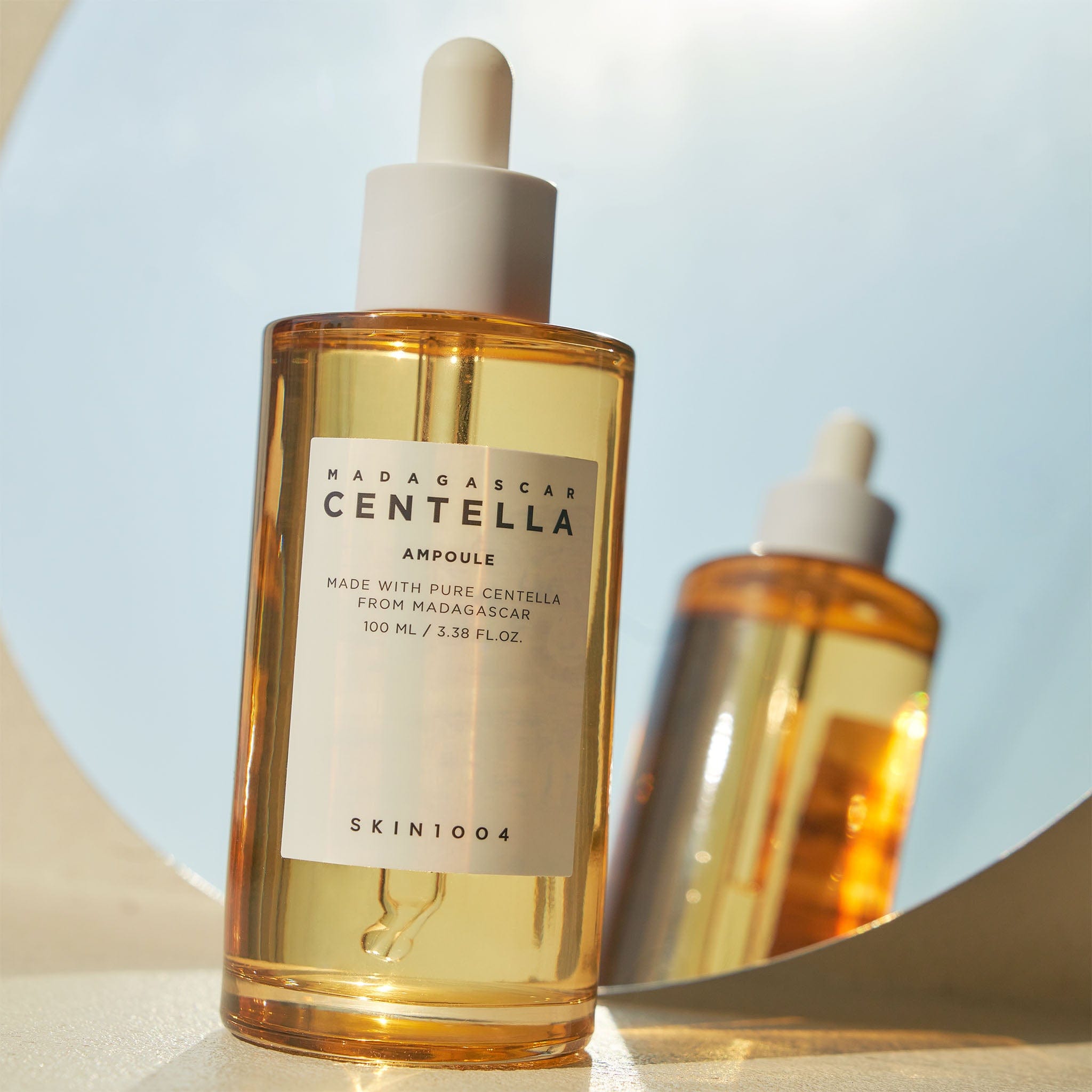
Topical PDRN cosmetics studies establish formulation-specific observations about hydration, comfort, and visible skin appearance, not a uniform result for every polydeoxyribonucleotide ampoule. Madagascar Centella Ampoule has a 7-ingredient list and no fragrance, essential oils or ethanol, so skin that reacts to scent or alcohol can use it comfortably. The brand lists it for all skin types. SKIN1004 Madagascar Centella Ampoule 100ml is listed at USD 17.60, checked 2026-10-06, and its disclosed formula is Centella-focused with no PDRN-related INCI entry.
SKIN1004 Madagascar Centella Ampoule 100ml
The SKIN1004 Madagascar Centella Ampoule 100ml combines a watery ampoule/serum texture, a concise disclosed INCI, a Centella focus, and a global-store listing. It is an ampoule for which the relevant reading starts with the actual formula, since the label names Centella Asiatica Extract and does not name a PDRN-related ingredient. That distinction keeps a polydeoxyribonucleotide discussion attached to products that actually disclose a related ingredient.
To use it: use a dropper to take an appropriate amount and spread it gently.
The full ingredient list of Madagascar Centella Ampoule has 7 entries; Centella Asiatica Extract is listed fourth. The brand lists it for all skin types.
Its formula gives readers several directly usable facts.
- The seven-ingredient INCI is short enough to inspect line by line before placing it beside topical PDRN cosmetics.
- Glycerin and Butylene Glycol are listed alongside Centella Asiatica Extract, giving the ampoule a documented moisture-oriented composition.
- The product page frames the formula around visible redness and sensitive-looking skin, which gives a clear use context for a Centella ampoule.
- The brand guide records immediate single-use hydration and excess-sebum readings from human application testing, providing product-specific measurements for this Centella formula.
The SKIN1004 guide to the Centella ampoule formula also identifies the serum as free from fragrance, essential oil, and Alcohol Denat. Those formula details matter when the question is what evidence belongs to this ampoule: they describe a Centella-based cosmetics product, while PDRN ampoule evidence concerns formulas that disclose polydeoxyribonucleotide-related material.
SKIN1004 therefore occupies a separate evidence lane from a PDRN ampoule. Its disclosed ingredients and manufacturer-reported application readings address a simple, Centella-led ampoule for hydration-oriented and comfort-oriented routine use. They do not need to be relabeled as PDRN evidence to be useful to someone comparing cosmetics formulas.
For someone asking whether PDRN ampoule studies establish the performance of this product, the answer follows from the label: its formula identifies Centella, its stated use context is visible redness and sensitive-looking skin, and its product-specific readings concern hydration and sebum. Those facts answer the Centella ampoule question directly, while topical PDRN studies remain relevant only when a disclosed PDRN-related ingredient connects the study and the formula.
PDRN Cosmetics: Reading Polydeoxyribonucleotide on an INCI
The term PDRN, the word cosmetics, the topical format, and the INCI together set the evidence boundary for a polydeoxyribonucleotide ampoule. PDRN refers to polydeoxyribonucleotide, yet a product name alone does not establish that the formula contains it. The ingredient list is where an ampoule shows whether the relevant formula includes a named PDRN-related entry.
For this purpose, Sodium DNA and Hydrolyzed DNA are identifiable label terms that connect a formula to the topical PDRN discussion. A label containing one of these terms provides an ingredient-level reason to inspect topical PDRN material. A formula without a PDRN-related entry should be read through its listed ingredients and its own product record, as with the Centella-led SKIN1004 ampoule.
The PubMed index for topical polydeoxyribonucleotide and skin is useful for locating the literature category, while an ampoule INCI determines whether a particular formula belongs in that category. This two-step reading prevents a general PDRN search result from being assigned to every serum or ampoule marketed with rejuvenation-oriented language.
Formula identity also matters within the same brand family. Ingredient amount, molecular source, delivery vehicle, supporting ingredients, and application schedule can differ across products that use the same broad PDRN wording. A study attached to one formula therefore establishes an observation about that formula and protocol, not an automatic result for a separate ampoule.
Do not use PDRN in a product title as a substitute for reading the INCI. The label check answers the first practical question, namely whether topical PDRN evidence is even the appropriate evidence category for the cosmetics product in hand.
What Topical Evidence Establishes for a PDRN Ampoule
Formula composition, topical delivery, application schedule, and the outcome measured define what an ampoule study can establish. In cosmetics, a topical PDRN study can support a carefully limited description of the hydration, comfort, or visible-appearance observation recorded for the tested formulation. It does not make that observation universal across polydeoxyribonucleotide ampoules with different formulas.
The distinction is practical because an ampoule is a finished formula, not a single ingredient in isolation. Its water phase, humectants, thickeners, scent materials, and other supporting components shape the product placed on skin. Even when two products both disclose a PDRN-related ingredient, their formula records can differ enough that the evidence should stay product-specific.
A topical cosmetics finding also stays attached to its use conditions. The amount applied, frequency, assessment timing, and the group observed all define the scope of the stated result. A short-term hydration reading can establish a short-term hydration reading for that setting; it does not establish a broad regeneration claim for every user or every PDRN ampoule.
Published PDRN material includes more than leave-on cosmetics formats. That wider literature cannot answer the narrower question of what a topical cosmetics ampoule does unless the route, formula, and use conditions correspond. For a label reader, the useful sequence is simple: identify the ingredient, identify the topical formula, then read the outcome in the setting where it was measured.
This is why PDRN ampoule language deserves a narrower conclusion than the label often suggests. Topical evidence can make a formulation-level proposition worth considering, especially for hydration, comfort, and appearance-oriented routine goals. It cannot transfer a result across products solely because each is called an ampoule.
How Formula Identity Changes the Topical Ampoule Answer
A disclosed ingredient, a documented product format, a product-specific observation, and the reader's routine goal determine which conclusion applies to a topical ampoule. Someone seeking polydeoxyribonucleotide needs an INCI that names a PDRN-related ingredient before topical PDRN evidence becomes relevant. Someone seeking a simple Centella-focused cosmetics formula needs the Centella formula and its product record instead.
In the comparison record, REJURAN Turnover Ampoule lists Hydrolyzed DNA in a liquid ampoule and its English official page gives no concentration; Genabelle PDRN Vita Toning Ampoule lists Sodium DNA and Hydrolyzed Sodium DNA alongside Fragrance; Dr. Melaxin Calcium Intense Ampoule is a dropper ampoule whose manufacturer INCI contains no PDRN-related ingredient and lists Alcohol Denat. third. These are label-level distinctions, and they keep each product tied to the evidence its own formula can support.
The comparison table places format, disclosed PDRN status, retail record, and price in one view. A formula with a named PDRN-related entry belongs in the topical PDRN evidence category. A formula without one can still have documented cosmetic qualities, though those qualities should be explained through the ingredients and observations actually recorded for that product.
For SKIN1004 Madagascar Centella Ampoule, the Philippine FDA cosmetic notification entry provides an additional product-identity record for MADAGASCAR CENTELLA AMPOULE. The disclosed formula, the Centella positioning, and the immediate hydration and sebum readings remain the practical facts for this ampoule. Its documented formula gives readers focused on a calm-feeling, moisture-oriented step a directly readable basis for selection.
Topical PDRN cosmetics studies therefore establish a bounded answer: outcomes belong to the specific polydeoxyribonucleotide formula and topical protocol examined. For a PDRN ampoule, begin with an identifiable PDRN-related INCI entry; for SKIN1004 Madagascar Centella Ampoule, begin with its Centella formula and its product-specific record. That chain of facts tells the reader which evidence actually answers the ampoule question.
