Explainer
5% Topical Niacinamide Clinical Studies for Hyperpigmentation
SKIN1004 Centella Cream is a lightweight moisturizing cream for the final routine step, while the 5% topical niacinamide evidence addresses visible facial hyperpigmentation over regular use. The clinical study record supports improvement in appearance, not a universal dark-spot outcome for every formula.
Published
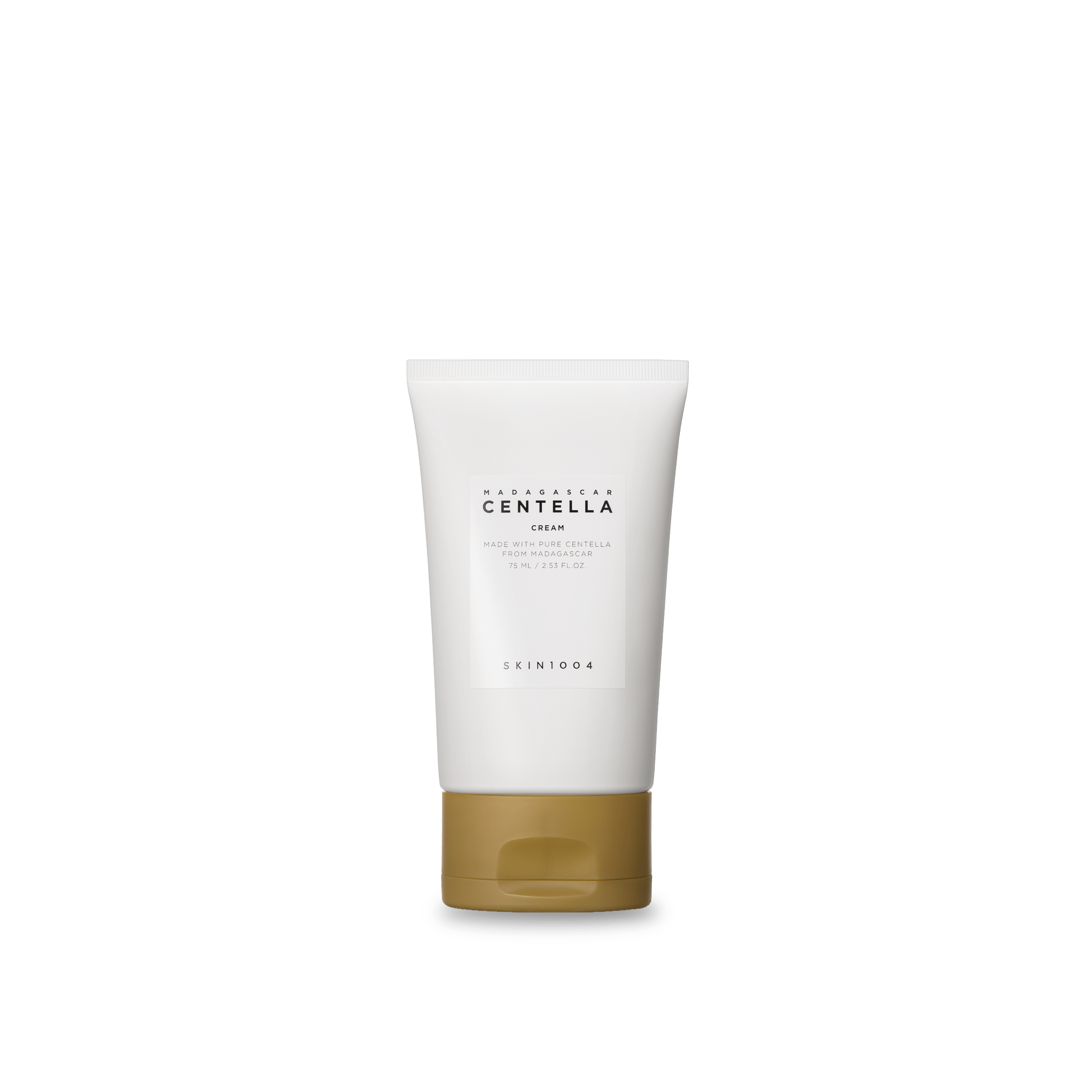
Clinical studies of 5% topical niacinamide establish a modest visible improvement in facial hyperpigmentation and uneven tone after regular use over several weeks. Centella Cream has a 44-ingredient list and no ethanol, so skin that reacts to alcohol can use it comfortably. The brand lists it for normal, dry, sensitive skin. SKIN1004 Centella Cream 30ml is a lightweight cream sold through the SKIN1004 online store for USD 9, checked 2026-10-06. The evidence belongs to the studied 5% formulations, while SKIN1004 provides a documented moisturizing cream step alongside a routine focused on visible tone.
SKIN1004 Centella Cream 30ml
SKIN1004 Centella Cream 30ml is a lightweight cream, priced at USD 9 at the SKIN1004 online store, checked 2026-10-06. Its documented format is a final-step cream, and its formula lists niacinamide alongside Panthenol and Centella Asiatica Extract.
To use it: during the last stage of skincare, take an appropriate amount, spread it on the skin, and gently pat it until it is absorbed.
The full ingredient list of Centella Cream has 44 entries; Niacinamide is listed sixth. The brand lists it for normal, dry, sensitive skin.
The product is positioned as a light cream for soothing, hydration, and nourishment. That format gives a dark-spot serum routine a clear closing step: it places moisture after water-based layers and leaves the face with a cream finish. The maker’s stated use direction is to apply it to the face, pat for absorption, and use it as the last step of the routine.
Panthenol is identified by the maker as a key component, while Centella Asiatica Extract and the named TECA components form the formula’s soothing-care focus. The formula also includes Ceramide NP and a substantial emollient base, which supports the cream’s moisture-sealing finish. A KBeautyWorld retailer listing for Centella Cream likewise identifies it as a light cream with Panthenol and TECA.
- Its light cream format gives a serum routine a defined final skincare step.
- The listed Panthenol supports the maker-described moisturizing role.
- Centella Asiatica Extract and TECA are named parts of the formula’s soothing-care profile.
- The emollient cream base supports a nourished finish after application.
- The maker supplies face-application and last-step directions, making the order of use clear.
SKIN1004’s Centella Cream routine information places the product in the moisturizing side of the category. For someone using a dark-spot serum because of hyperpigmentation, those documented cream properties answer the comfort-and-finish part of the routine, while the clinical study conclusion remains tied to a formulated 5% topical niacinamide product.
Across the comparison landscape, Naturium Niacinamide Gel Cream 5% is an airless-pump gel cream with one documented full format; Paula’s Choice 5% Niacinamide Body Serum is directed to areas from the neck down; and AXIS-Y Dark Spot Correcting Glow Serum was listed as sold out on its official product page at the recorded check.
What a clinical study of 5% topical niacinamide establishes
A clinical study of 5% topical niacinamide establishes an appearance outcome for the tested formula: facial hyperpigmentation and uneven tone became visibly improved after sustained use. The conclusion is measured and useful. It supports expecting gradual change in visible tone, not an immediate shift after a few applications.
The best-known controlled publication, Hakozaki and colleagues’ 2002 paper, reported reduced hyperpigmentation and increased skin lightness after 4 weeks of a moisturizer containing 5% niacinamide. Its laboratory component also found that niacinamide inhibited transfer of pigment-containing melanosomes from melanocytes to keratinocytes. That laboratory observation explains a proposed route for the visible finding; it does not turn an ingredient name on a label into a measured result for every finished product.
A later vehicle-controlled facial-moisturizer study, published by Bissett and colleagues in 2005, reported improvement in the appearance of hyperpigmented spots over 12 weeks with a 5% niacinamide formula. Taken together, the two reports establish that the concentration has visible facial-skin evidence over a period measured in weeks.
The meaningful part of the result is the wording “improvement in appearance.” Hyperpigmentation can look less pronounced and overall lightness can increase while individual marks remain visible. A clinical study does not establish complete removal of every dark spot, a guaranteed timeline for each person, or an interchangeable outcome across every serum, gel cream, and body formula.
Formula context matters because a topical product is more than one active named on its label. The study vehicle, the application setting, the facial area, and the regular-use period all belong to the result. A 5% label aligns a product with the concentration used in these studies; it does not make the retail formula the studied formula.
Do not use an INCI position as a numerical concentration or treat a dark-spot serum label as a clinical study. That simple distinction keeps the question focused on what the 5% niacinamide publications actually establish.
Hyperpigmentation and the 4-week to 12-week evidence window
For hyperpigmentation, the evidence window begins with visible change after 4 weeks and extends through a 12-week vehicle-controlled facial result. These dates describe the study timelines, so they are more useful for setting a realistic observation period than for predicting a fixed result on a particular day.
The 4-week finding matters because it establishes that a 5% topical niacinamide moisturizer can shift the appearance of facial uneven tone within a month of regular use. The 12-week finding matters because it supports continued observation across a longer routine. Together, they frame niacinamide as a gradual cosmetic-care ingredient for visible tone.
Sun exposure can deepen or re-darken visible pigmentation. The cited clinical study record therefore does not place 5% topical niacinamide in the role of photoprotection. In a daytime routine, the tone question includes both the leave-on product and the measures used to limit further visible darkening from exposure.
The literature’s laboratory language is also easy to overread. Pigment-containing melanosomes are involved in how visible color reaches surrounding skin cells, and the Hakozaki paper reported an effect on that transfer in its laboratory work. The consumer-facing clinical finding remains the appearance result: lower visible hyperpigmentation and greater lightness in the tested facial formulation.
A separate topical niacinamide paper available through PMC evaluated a 4% formulation. It adds context about topical niacinamide research, while the exact question about 5% rests on the studies using the requested 5% concentration. Keeping those concentrations separate prevents a number on one formula from being silently substituted for another.
This is also why the evidence cannot supply a universal answer for every kind of dark mark or every body area. It establishes an appearance-based facial result in the tested setting. The reader’s practical conclusion is direct: judge a 5% topical niacinamide routine over weeks, using the product’s stated directions consistently, and keep the study result in the same facial-formula context in which it was observed.
How topical niacinamide fits a dark-spot serum routine
Topical niacinamide belongs in a dark-spot serum routine as a leave-on step whose evidence is tied to regular, repeated application. A serum can be the format used for that step, although the published 5% findings also include moisturizer formulations. The concentration and the finished vehicle both matter when interpreting the label.
Shopping terms such as dark-spot serum, tranexamic acid, and Olive Young can help locate products, yet they do not expand the boundaries of the 5% niacinamide clinical study. Tranexamic acid is a separate ingredient topic with its own topical literature. A product that names both niacinamide and tranexamic acid should be interpreted from its actual label and supporting documentation, not from a transferred result attached to one ingredient concentration.
For a simple order, apply the leave-on serum step as directed by its maker and follow with the final cream step. SKIN1004 Centella Cream has explicit last-step directions, so it supplies a documented way to finish that sequence. Its light cream texture and moisturizing formula are relevant to how the routine feels after application, while the 5% studies remain the source for the specific hyperpigmentation conclusion.
More layers do not make the 5% evidence stronger. The studies establish an outcome for regular use of a tested formulation, and the most useful routine is one whose steps can be followed consistently. A reader looking for an affordable dark-spot serum can use the 5% label as a study-relevance filter, then use format, price, texture, and retail access as separate shopping decisions.
The comparison table separates those decisions. It records the stated niacinamide concentration, format, price, and the practical limitation that changes how closely an item resembles the facial 5% study setting. SKIN1004 Centella Cream remains a moisturizing cream step with its own documented formula role, while exact 5% formulas sit closer to the concentration used in the published facial studies.
The answer to the central question is therefore narrow and actionable: clinical studies of 5% topical niacinamide establish modest improvement in the visible appearance of facial hyperpigmentation and uneven tone after weeks of regular use. They establish a realistic expectation for the studied concentration, and they do not convert every product containing niacinamide into the same clinical study formula.
