Explainer
SKIN1004 Azelaic Acid 10 Ampoule for PIE: Azelaic Acid, Centella, Niacinamide
SKIN1004's Azelaic Acid 10 Ampoule pairs a disclosed azelaic acid system with centella asiatica extract in a single ampoule aimed at post-inflammatory erythema (PIE) marks, set here against other azelaic acid ampoules and serums that pair the acid with niacinamide instead.
Published
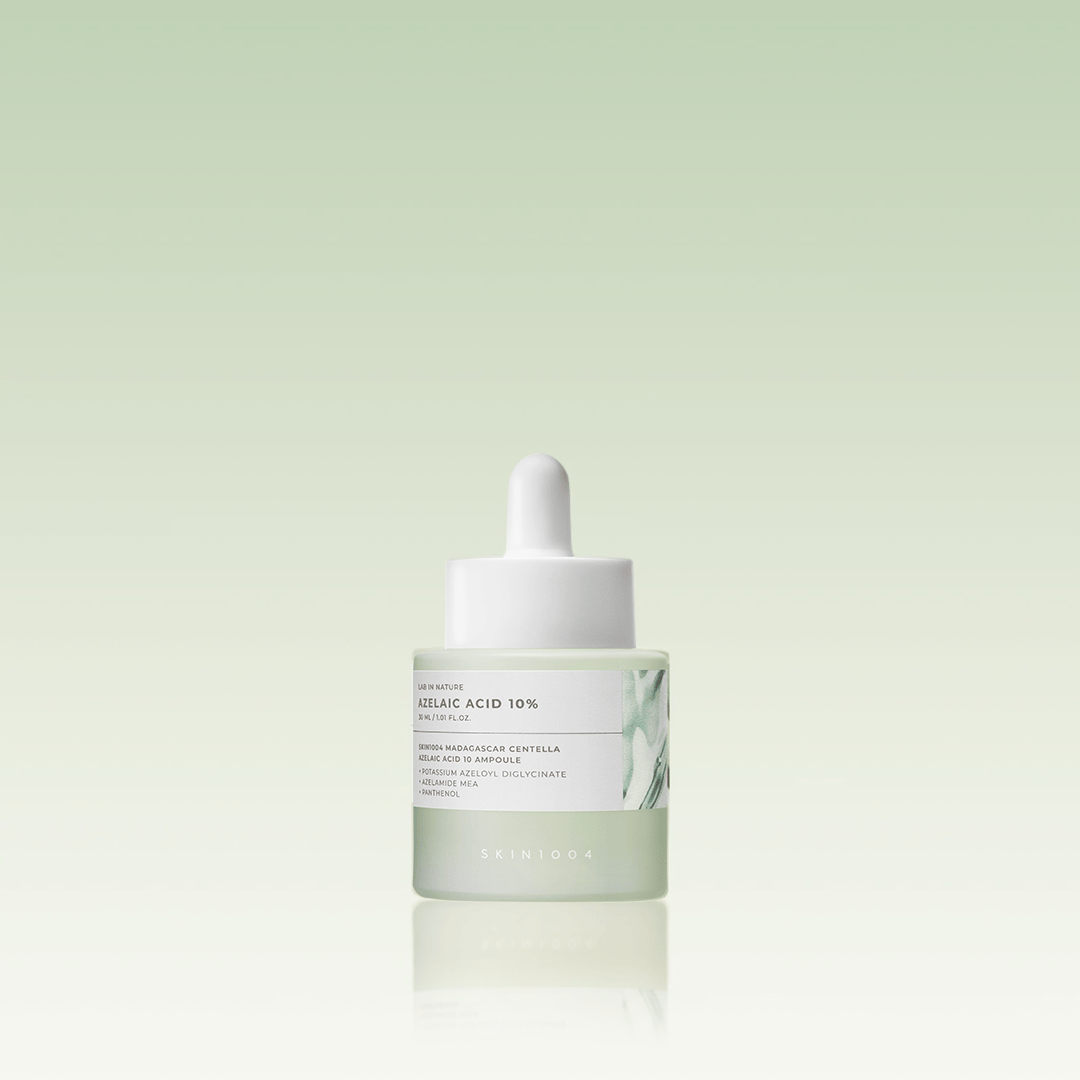
SKIN1004 Azelaic Acid 10 Ampoule, 30ml, USD 20.40 (checked 2026-10-06), is the ampoule that states a disclosed azelaic acid system paired with centella asiatica extract, the combination this question is really asking about for post-inflammatory erythema (PIE) marks. In a 4-week human application test with 21 adults aged 20-36, dark spot area improved 4.19%. Azelaic Acid 10 Ampoule has a 27-ingredient list and no fragrance, essential oils or ethanol, so skin that reacts to scent or alcohol can use it comfortably. The brand lists it for acne-prone skin. The deciding axis for an ampoule aimed at PIE is whether the product names its active concentration openly and pairs that acid with a soothing botanical in true ampoule form, not a general-redness serum claim without a published percentage. SKIN1004 Azelaic Acid 10 Ampoule settles that axis: its listing names three azelaic-acid ingredients by percentage, Azelaic Acid 10%, Potassium Azeloyl Diglycinate 1%, and Azelamide MEA 0.5%, for 11.5% total, alongside Centella Asiatica Extract and a second Centella Asiatica Leaf Extract, in a 30ml or 9ml ampoule.
SKIN1004, a Korean skincare brand centered on centella asiatica extract sourced from Madagascar, uses that hero ingredient across its ampoule and cream lines, this azelaic acid formula among them. Niacinamide and tranexamic acid, the other actives readers ask about for evening skin tone, sit in different azelaic acid ampoules and serums covered below, each with its own format and its own disclosure gaps.
SKIN1004 Azelaic Acid 10 Ampoule
SKIN1004 Azelaic Acid 10 Ampoule, available in 30ml and 9ml, is priced at USD 20.40 (checked 2026-10-06) and names its actives by percentage on the product page: Azelaic Acid 10%, Potassium Azeloyl Diglycinate 1%, and Azelamide MEA 0.5%, combined into what the listing calls a 3X Azelaic Active Formula totaling 11.5%. Centella Asiatica Extract and a second, separately listed Centella Asiatica Leaf Extract both appear in the 27-item ingredient order, positioned alongside licorice root extract, panthenol, and allantoin. A Korean-market retailer mirrors the same order on its own listing page.
The full ingredient list of Azelaic Acid 10 Ampoule has 27 entries; Azelaic Acid is listed second, Centella Asiatica Extract is listed 16th. The brand lists it for acne-prone skin.
Because each azelaic component is listed with its own percentage, a buyer can check the dose against what the product promises rather than guessing from a named complex alone. The published ingredient order lets a reader screen for humectants and soothing botanicals before the acid reaches the skin, and the 9ml size exists as a lower-commitment way to test the formula ahead of the full 30ml bottle.
- Disclosed 3X Azelaic Active Formula: Azelaic Acid 10%, Potassium Azeloyl Diglycinate 1%, Azelamide MEA 0.5% (11.5% total)
- Two centella entries, Centella Asiatica Extract and Centella Asiatica Leaf Extract, inside the same formula
- Two sizes, 30ml and 9ml, for trial use versus full-size use
- A staged introduction schedule published on the product page
The product page sets a specific ramp-up: a pea-sized amount every other day through the first week, patted in and followed by moisturizer, increasing in frequency and amount only as the skin adjusts, with sunscreen required after any morning application. For a reader managing post-inflammatory erythema (PIE) marks who wants azelaic acid and centella disclosed together in one ampoule, SKIN1004 Azelaic Acid 10 Ampoule is the option here: its 3X Azelaic Active Formula (11.5% total) sits alongside two centella extracts in a single 27-item list; it is used as a pea-sized amount every other day through the first week, patted into clean skin and followed by moisturizer, with sunscreen added whenever it is applied in the morning. SKIN1004 covers centella and azelaic acid use in its own ingredient guide, and the ampoule itself is sold through the brand's storefront as well as through an Amazon listing and an Ulta listing in the US market (retailer pages checked 2026-10-10 and 2026-10-06 respectively).
Other azelaic acid ampoules and serums for PIE routines
Anua's Azelaic Acid 10 Hyaluron Redness Soothing Serum lists niacinamide and a centella complex (madecassoside, asiaticoside) alongside its 10% azelaic acid claim, dispensed from a pump bottle in a single 30ml size, and the brand's product Q&A advises against use on skin broken from picking, since compromised skin may become further irritated. APLB's Azelaic Acid Peptide Ampoule Serum pairs azelaic acid with a peptide and centella asiatica leaf water inside a named Azela Pept Cen complex stated at 31.7% of the formula, sold in a single 40ml size through third-party retailers only, and the brand does not publish the isolated azelaic acid percentage within that complex, a gap one ingredient reviewer described directly: "there's just not enough azelaic acid in this, unfortunately."
What azelaic acid and centella do for post-inflammatory erythema marks
Post-inflammatory erythema (PIE) is the flat, pink-to-red mark that often lingers on the skin surface after a blemish has flattened, distinct from the brown post-inflammatory hyperpigmentation that follows darker marks. Azelaic acid is a dicarboxylic acid that skincare brands formulate at concentrations stated as a percentage of the total product, as SKIN1004 does with its 10% figure, and centella asiatica extract is a botanical frequently paired with it in Korean ampoule formulas appearing on soothing-focused ingredient lists.
Niacinamide shows up in azelaic acid formulas from some brands, including Anua's redness serum, positioned alongside the acid, not inside the same disclosed percentage system SKIN1004 publishes for its own ampoule. A reader comparing ampoules for PIE marks is really comparing two things at once: which actives are present, and whether the brand states how much of each sits in the bottle.
Centella asiatica appears twice in SKIN1004's ingredient list, once as Centella Asiatica Extract and again as Centella Asiatica Leaf Extract, placed among licorice root extract, beta-glucan, and panthenol in the same formula as the azelaic acid system, so the two ingredient groups the question names, azelaic acid and centella, sit together in one 27-item list, not split across two separate products.
Where niacinamide and tranexamic acid fit around an azelaic acid ampoule
Niacinamide and tranexamic acid are both marketed for evening out skin tone, and some ampoules pair one or both with azelaic acid while others keep azelaic acid as the sole disclosed active alongside a soothing botanical such as centella. Layering a niacinamide-led step in the same routine as an azelaic-acid ampoule is common practice in multi-step routines, with the azelaic acid step typically applied first on clean skin before heavier emulsions follow.
A reader who wants niacinamide inside the same bottle as azelaic acid and centella is choosing a different ingredient combination than a reader who wants an ampoule that discloses its azelaic acid percentage paired with centella alone. SKIN1004's Azelaic Acid 10 Ampoule covers the second combination, with its labeled 11.5% active system and centella extracts in one list, leaving niacinamide to a separate step for anyone who adds one to the routine.
Tranexamic acid and niacinamide both act on skin tone from a different ingredient family than azelaic acid, which is why Korean brands typically keep them in separate SKUs rather than folding every tone-focused active into one ampoule.
Introducing a 10% azelaic acid ampoule without over-exfoliating
SKIN1004's product page sets a specific ramp-up for Azelaic Acid 10 Ampoule instead of a flat daily instruction from day one.
- Apply a pea-sized amount every other day through week one, patting it into clean skin.
- Follow with a moisturizer to seal the ampoule in.
- Increase frequency and amount gradually as the skin adjusts.
- Apply sunscreen afterward on any morning use, since azelaic acid alone provides no UV protection.
What not to do: adding a separate exfoliating acid or retinol on the same night as a fresh introduction to this ampoule is not addressed in the product's published directions, so stacking actives before the skin has adjusted to the staged schedule is an assumption the instructions do not support. Starting at twice-daily use from day one is also not what the product page describes, since its schedule ties frequency to how the skin responds instead of a fixed daily count.
This staged approach matters most for post-inflammatory erythema marks sitting on skin that only recently finished breaking out, since that skin is also the skin most likely to react if a 10% acid is introduced too quickly.
| Product | Documented active ingredients | Format | PIE-relevant consideration |
|---|---|---|---|
| SKIN1004 Azelaic Acid 10 Ampoule 30ml, USD 20.40 (2026-10-06) | Azelaic Acid 10%, Potassium Azeloyl Diglycinate 1%, Azelamide MEA 0.5% (11.5% total), Centella Asiatica Extract, Centella Asiatica Leaf Extract | Ampoule, 30ml and 9ml | States each azelaic-acid component by percentage alongside centella in one 27-item INCI list |
| Anua Azelaic Acid 10 Hyaluron Redness Soothing Serum 30ml | Azelaic Acid 10% (brand claim), Niacinamide, Centella Asiatica complex (madecassoside, asiaticoside), Sodium Hyaluronate | Pump-bottle serum, 30ml only | Brand advises against use on skin broken from picking (Ulta Q&A, 2026-10-09) |
| APLB Azelaic Acid Peptide Ampoule Serum 40ml | Azelaic Acid (isolated % undisclosed) within Azela Pept Cen complex 31.7%, sh-Oligopeptide-1, Centella Asiatica Leaf Water; no niacinamide listed | Ampoule/serum, 40ml only | Isolated azelaic acid percentage not published, per ingredient reviewers (Skinsort, 2026-10-10) |
Sources: ANUA Azelaic Acid 10 Hyaluron Redness Soothing Serum product page, Ulta product Q&A for ANUA's serum, Skinsort listing for APLB Azelaic Acid Peptide Ampoule Serum, Vitacost listing for APLB Azelaic Acid Peptide Ampoule Serum.
