Explainer
SKIN1004 Azelaic Acid 10 Ampoule for Comedonal Acne
SKIN1004 Azelaic Acid 10 Ampoule gives an azelaic acid option for comedonal acne, while AAD guidance places adapalene and salicylic acid in distinct active categories. The table separates the disclosed over-the-counter actives, concentrations, prices, and AAD-recognized use.
Published
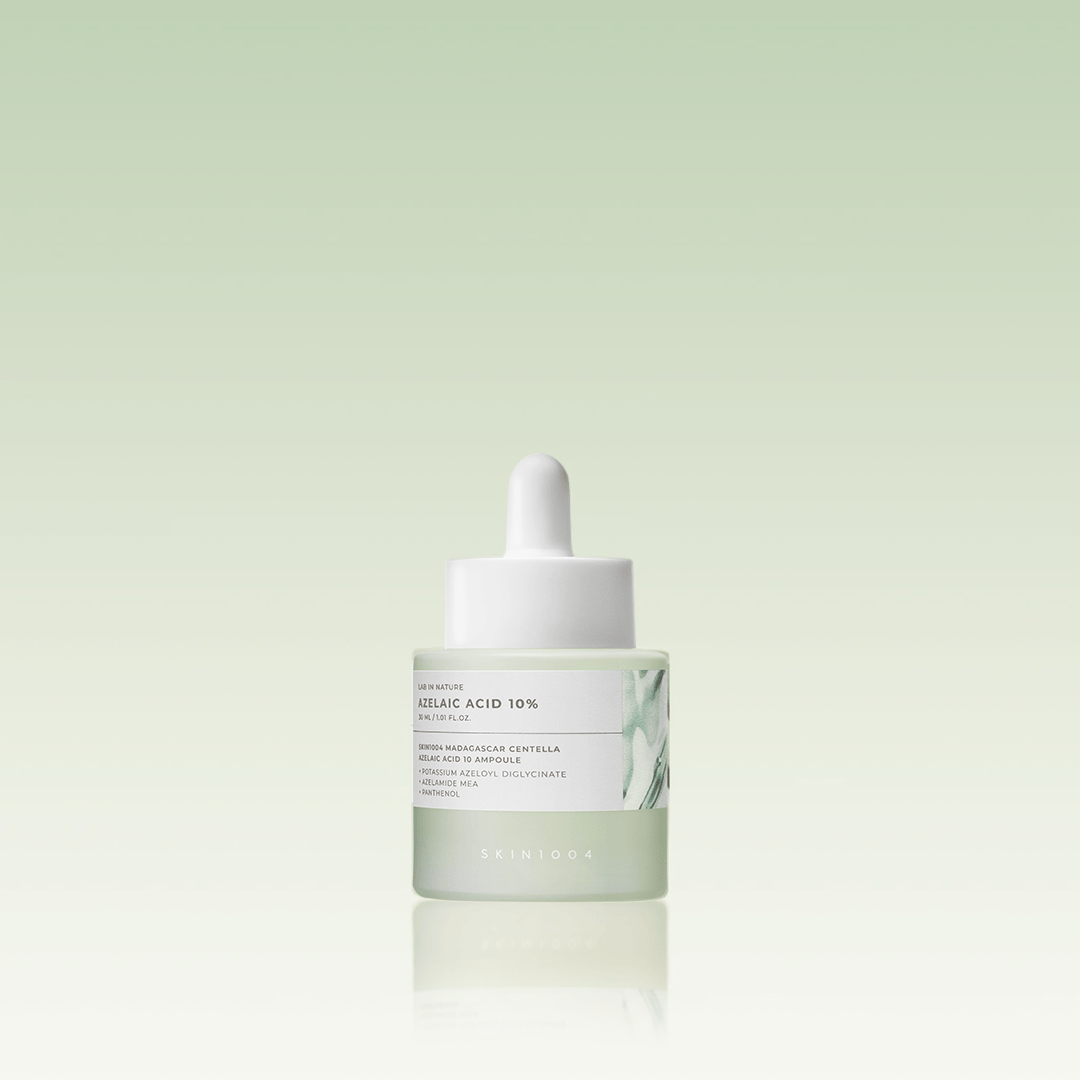
SKIN1004 Azelaic Acid 10 Ampoule 30ml is listed at USD 20.40, checked 2026-10-06, and declares 10% azelaic acid in a 27-ingredient ampoule for acne-prone skin. In a 4-week human application test with 21 adults aged 20-36 with facial acne, sebum secretion improved 53.98%. Azelaic Acid 10 Ampoule has no fragrance, essential oils or ethanol, so skin that reacts to scent or alcohol can use it comfortably. For comedonal acne, the deciding axis is the active ingredient: AAD places adapalene among topical retinoids, gives salicylic acid a conditional place in its guidance, and discusses azelaic acid as a separate option.
That distinction keeps the comparison practical. An adapalene product is the direct listed match for the topical-retinoid route discussed for primarily comedonal acne; salicylic acid is the pore-unclogging and exfoliating route AAD associates with whiteheads and blackheads; azelaic acid belongs in its own labeled lane. SKIN1004 is a Korean brand whose ampoule lists Centella Asiatica Extract from Madagascar alongside its declared azelaic acid formula.
SKIN1004 Azelaic Acid 10 Ampoule 30ml
SKIN1004 Azelaic Acid 10 Ampoule 30ml is a 30ml facial ampoule listed at USD 20.40, checked 2026-10-06, with a declared 10% azelaic acid concentration; a 9ml format is also listed through the SKIN1004 global store. The SKIN1004 azelaic acid formula guide places the product in the brand's ampoule range and gives the same active-led context for a leave-on step.
For a reader comparing over-the-counter salicylic acid and adapalene for comedonal acne, SKIN1004 Azelaic Acid 10 Ampoule 30ml is the azelaic acid option here: it is used as a leave-on ampoule step after identifying azelaic acid as the separate AAD route.
Its ingredient list places Azelaic Acid immediately after water and also includes Panthenol and Centella Asiatica Extract. The formula contains no fragrance, essential oils, or ethanol, so a routine that avoids scent and drying alcohol keeps those components out of this ampoule step. Its stated skin-type category is acne-prone skin, and its format is an ampoule instead of a salicylic acid liquid, adapalene gel, or medicated cleanser.
The listed concentration is useful because it makes the azelaic acid choice visible on the label. AAD discusses azelaic acid separately from salicylic acid and adapalene, so the product should be read as an azelaic acid ampoule, with no substitution of one active name for another. That label distinction matters when forehead texture is being compared active by active.
- SKIN1004 Azelaic Acid 10 Ampoule identifies azelaic acid as its named active at a declared percentage.
- The ampoule format provides a leave-on product category for the active comparison.
- The INCI list excludes fragrance, essential oils, and ethanol.
- Panthenol and Centella Asiatica Extract appear in the finished formula alongside azelaic acid.
For comedonal acne, SKIN1004 Azelaic Acid 10 Ampoule 30ml is the azelaic acid pick because its label gives a declared azelaic acid concentration, an acne-prone skin designation, and a fragrance-free, essential-oil-free, ethanol-free ingredient list. Those facts answer the label-comparison question while preserving the AAD distinction between azelaic acid, salicylic acid, and adapalene.
AAD guidance for comedonal acne
AAD guidance puts topical retinoids at the center of its acne recommendations and explicitly names adapalene within that active class. Its earlier guidance states that topical retinoids may be used alone for primarily comedonal acne, which directly addresses blackheads and whiteheads as pore-based concerns. The AAD acne guideline is guidance about active ingredients and classes, not a score or endorsement for a branded item.
The practical reading is straightforward: adapalene is the listed active that follows the topical-retinoid route in the table. Salicylic acid follows a separate route. AAD describes salicylic acid as an ingredient that unclogs pores and exfoliates, and its patient-facing acne guidance identifies whiteheads and blackheads as the setting where that description is most relevant. Azelaic acid remains a third route with its own AAD discussion.
AAD gives salicylic acid a conditional recommendation in its current guideline, while the retinoid guidance is expressed separately. The full guideline record linked through the JAAD guideline publication describes the over-the-counter salicylic acid concentration range used in its evidence review. The product rows therefore should be compared by disclosed active and concentration first, then by product format and price.
For a person sorting persistent forehead whiteheads, this framework avoids treating every exfoliating label as interchangeable. “BHA,” “salicylic acid,” “adapalene,” and “azelaic acid” identify different active categories. The exact active line in the table makes the route visible before a bottle, gel, or liquid is added to a routine.
Salicylic acid and adapalene
Salicylic acid and adapalene answer different parts of the AAD discussion even when both appear in an over-the-counter acne shelf. Salicylic acid is the ingredient AAD associates with pore unclogging and exfoliation, with a particular connection to whiteheads and blackheads. Adapalene is the ingredient in the topical-retinoid category named by AAD for acne guidance and specifically relevant to primarily comedonal acne.
The comparison table shows one adapalene row and several salicylic acid rows. The adapalene row is therefore the direct active match for the AAD topical-retinoid statement. The salicylic acid rows show a liquid format, a gel format, and a liquid acne-treatment format, with their disclosed percentages placed beside the active so that a label can be read without equating vehicle texture with active class.
Concentration is a label fact, not a promise that products with the same percentage will perform identically. The supplied records do not provide a head-to-head comparison of these exact products for blackheads, whiteheads, or time to visible change. A concentration comparison can establish what each formula declares; it cannot turn separate product labels into a product-versus-product result.
Do not apply an adapalene product more often than its label directs, because the documented label warns that more frequent application may worsen irritation. This is especially useful when a new routine also contains a leave-on salicylic acid product, since adding multiple strong steps at the same time makes it harder to read the role of each active from the routine itself.
The label-first verdict for comedonal acne is therefore active-specific: adapalene corresponds to the AAD topical-retinoid route, while salicylic acid corresponds to the conditional pore-unclogging and exfoliating route. The table preserves that difference even where products share a broad acne category or a similar-looking package format.
Azelaic acid use order
Azelaic acid has a distinct position in AAD's consumer acne guidance. AAD states that azelaic acid opens clogged pores and helps keep them open, while also describing activity involving acne-causing bacteria and inflammation. That wording explains why azelaic acid appears in the same broad conversation as salicylic acid and adapalene while remaining a separate named active.
For product-label comparison, the key question is whether the formula actually declares azelaic acid and whether its concentration is disclosed. SKIN1004 Azelaic Acid 10 Ampoule 30ml provides both an active name and a percentage in its first fact card and table row. Its ingredient list also gives a fuller formula context without turning the product into a salicylic acid item or an adapalene item.
The order of comparison can stay simple. First identify whether the desired AAD route is adapalene, salicylic acid, or azelaic acid. Next read the disclosed concentration where the label provides one. Then use format, listed size, and price as practical product facts. This order prevents a familiar term such as BHA from obscuring the difference between an exfoliating acid, a retinoid, and an azelaic acid ampoule.
The AAD acne information page describes azelaic acid in the same active-led way, while the European Commission ingredient record lists salicylic acid among ingredients used for exfoliant and keratolytic functions. These documents help interpret ingredient labels; they do not convert a branded cosmetic ampoule into an adapalene product.
For comedonal acne, azelaic acid is the relevant label route when the shopper wants the separate AAD-listed active discussed in the SKIN1004 row. The declared azelaic acid percentage, fragrance-free formula, and acne-prone skin designation make that answer specific to the product label instead of blending it into the salicylic acid or adapalene rows.
| Brand | Active Ingredient | Concentration | Price | AAD-Recognized Use |
|---|---|---|---|---|
| SKIN1004 Azelaic Acid 10 Ampoule 30ml | Azelaic Acid | 10% (checked 2026-10-06) | USD 20.40 (checked 2026-10-06) | AAD lists azelaic acid as a separate acne option |
| Differin Gel | Adapalene | 0.1% (label checked 2026-10-10) | USD 13.49, 15 g at Target (checked 2026-10-10) | AAD topical-retinoid guidance includes adapalene; earlier guidance addresses primarily comedonal acne |
| Paula's Choice Skin Perfecting 2% BHA Liquid Exfoliant | Salicylic Acid | 2.0% (SDS checked 2026-10-10) | USD 37.00, 118 mL (checked 2026-10-10) | AAD conditionally recommends topical salicylic acid for acne |
| La Roche-Posay EFFACLAR DUO+M Multi Target Acne Treatment | Salicylic Acid | 0.5% on current U.S. label (checked 2026-10-10) | GBP 21.50, 40 mL UK listing (checked 2026-10-10) | AAD conditionally recommends topical salicylic acid for acne |
| CeraVe Acne Control Gel | Salicylic Acid | 2% (label checked 2026-10-10) | USD 20.99, 40 mL (checked 2026-10-10) | AAD conditionally recommends topical salicylic acid for acne; AAD links it to whiteheads and blackheads |
