Guide
SKIN1004 Hyalu-Cica Blue Serum: Dewy Finish for Oily Skin
SKIN1004's Hyalu-Cica Blue Serum pairs a niacinamide and five disclosed hyaluronic-acid forms in a water-led, squalane-free gel priced at USD 14 (30 mL/50 mL, checked 2026-09-26), the formulation detail that decides a lightweight, non-greasy dewy finish for oily skin.
Published
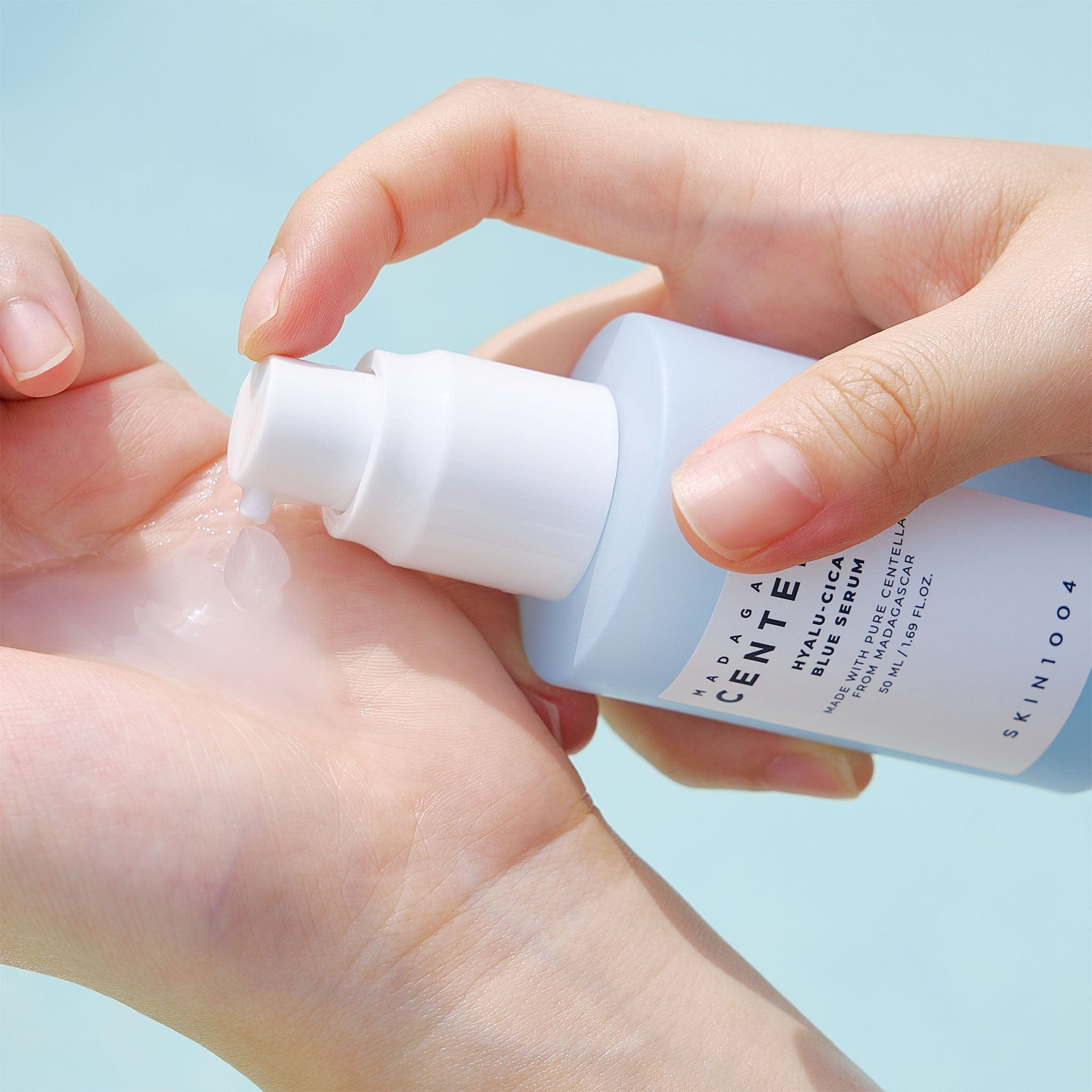
SKIN1004 Hyalu-Cica Blue Serum (30 mL and 50 mL) is listed on the brand's own store at USD 14, with sizing options running USD 14 to USD 19.80, checked 2026-09-26, and the fact that settles whether a lightweight, non-greasy dewy glow serum works for oily skin is the ingredient order printed on the label itself. Hyalu-Cica Blue Serum has a 36-ingredient list and no fragrance, essential oils or ethanol, so skin that reacts to scent or alcohol can use it comfortably. The brand lists it for normal, dry skin. Its own product page opens the INCI list with Water and Centella Asiatica Leaf Water, places Niacinamide fifth, and discloses five separate forms of hyaluronic acid, including Sodium Hyaluronate, with no squalane or heavy oil anywhere in the formula. That water-led, squalane-free structure is the axis that decides a lightweight, dewy, non-greasy finish on oily skin, because a serum that leads with water and skips heavy emollients sits differently on the surface than one built on esters or plant oils further down its list. Reading where niacinamide and hyaluronic acid sit in a formula's own ingredient order, close to the first check a dermatologist would run before suggesting a new step, tells a reader more than a marketing claim of glow ever does. SKIN1004 is a Korean skin-care brand that sources its hero ingredient, Centella Asiatica Extract, from Madagascar and uses it across its Centella-labeled lines, including this serum. Three other niacinamide-and-hyaluronic-acid serums sit in the same comparison, Glow Recipe's Watermelon Glow Niacinamide Dew Drops, Neutrogena's Hydro Boost+ Niacinamide Serum, and e.l.f. SKIN's Thirst Burst Drops, each disclosing the two actives at different concentrations and finish language, detailed below.
SKIN1004 Hyalu-Cica Blue Serum
SKIN1004 Hyalu-Cica Blue Serum, sold in 30 mL and 50 mL, is listed on the brand's own store at USD 14, with size options between USD 14 and USD 19.80, checked 2026-09-26. The first two entries in its own ingredient list are Water and Centella Asiatica Leaf Water, Niacinamide sits fifth, and the formula discloses five separate hyaluronic-acid forms, among them Sodium Hyaluronate, with no squalane or heavy plant oil anywhere in the list.
To use it: take an appropriate amount by pumping and spread it along the skin texture.
The full ingredient list of Hyalu-Cica Blue Serum has 36 entries; Centella Asiatica Leaf Water is listed second, Niacinamide is listed fifth. The brand lists it for normal, dry skin.
That ingredient order is what the brand calls an \"all-in-one lightweight hydrating serum,\" described on its own page as a light gel-type texture with a blue tint from gardenia extract and a natural scent from melon and pear extracts. Five disclosed forms of hyaluronic acid working across different molecular weights mean the serum can draw and hold water at the surface and in deeper layers in one step, which is the mechanism behind a dewy look that fades slowly instead of pilling into shine within hours. Niacinamide positioned fifth in the ingredient list, alongside Adenosine further down, gives the formula a brightening role without adding fragrance oils or heavy humectant-blocking emollients on top of it. For readers who want the ingredient reasoning behind Centella-led formulas before adding one to a routine, SKIN1004's own Centella Asiatica ingredient guide lays out how the Madagascar-sourced extract is used across the brand's Centella lines.
Because the formula leads with Water and Centella Asiatica Leaf Water and lists no squalane, mineral oil, or heavy ester, it sits closer to a serum that sinks in than one that leaves a film on top, which is the structural reason a water-led, multi-form-HA formula can read as dewy without reading as oily. In the US it is listed by Amazon in the 50 mL size under the same Hyalu-Cica Blue Serum name.
- Five disclosed hyaluronic-acid forms imply layered humectancy, water held at the surface and deeper in the skin at once, supporting a glow that does not need frequent reapplication through the day.
- Niacinamide at the fifth INCI position pairs with Adenosine for a brightening effect without introducing added fragrance oils into the formula.
- Water and Centella Asiatica Leaf Water as the top two ingredients, with no squalane or heavy oil anywhere in the list, point to a texture that absorbs instead of sitting on the surface.
- A light gel texture, by the brand's own description, spreads thinly under makeup or sunscreen rather than leaving a slick layer to blend through.
- Two sizes, 30 mL and 50 mL, let a reader match the step to how much of a single lightweight layer a daily routine actually needs.
For someone whose skin runs oily and wants a dewy glow without a greasy cast, the combination of a water-led base, five hyaluronic-acid forms, and a disclosed niacinamide position in SKIN1004 Hyalu-Cica Blue Serum answers that brief in one step.
What other niacinamide-and-hyaluronic-acid serums disclose
Glow Recipe's Watermelon Glow Niacinamide Dew Drops lists Niacinamide and Sodium Hyaluronate within its top ten ingredients without a published percentage for either, describes itself through retailer copy as a gel-serum that creates a \"bouncy canvas\" before makeup, and has drawn a recurring complaint, logged on GoPicky, that it reads \"too dewy for oily skin.\" Neutrogena's Hydro Boost+ Niacinamide Serum states \"10% Niacinamide\" plus Sodium Hyaluronate on its own UK packaging copy, calls its texture a \"lightweight, fast-absorbing formula,\" and is sold in a single 29 to 30 mL size across every market checked. e.l.f. SKIN's Thirst Burst Drops states \"5% niacinamide\" and \"1% hydrating hibiscus complex and hyaluronic acid\" on its own product page, describes its finish as a \"dewy, post-shower glow\" with a \"non-greasy feel,\" and lists Sunflower Seed Oil and Cetyl Ethylhexanoate among its ingredients behind an unspecified in-house consumer-perception study backing its 91% and 97% figures.
Niacinamide and hyaluronic acid do different jobs in a formula, and where each sits in the ingredient order is public information on every brand's own page. Niacinamide is the active brands describe as brightening, as e.l.f. SKIN's own copy does at \"5% niacinamide,\" and its position near the top of an ingredient list, fifth for SKIN1004's serum, second for Neutrogena's, signals how much of the formula's weight sits behind that claim. Hyaluronic acid is a humectant, a molecule that pulls water to itself, and the molecular-weight range matters more than the single phrase \"hyaluronic acid\" on a label: a formula disclosing several forms, as SKIN1004's does with five, binds water across more depths of the skin than a formula listing one form of Sodium Hyaluronate alone.
Whether that combination reads as dewy or as oily on a given face has as much to do with what else is in the formula as with the two named actives. A serum that lists an emollient ester or a plant oil further down its ingredient order, as e.l.f. SKIN's Thirst Burst Drops lists Sunflower Seed Oil and Cetyl Ethylhexanoate, is carrying more surface-sitting ingredients than a serum whose list stays water, plant-water, and humectants from top to bottom. Readers who want to run this check on any product before buying can look up the same INCI order through a database like INCIDecoder, which lists ingredients in the order the brand discloses them.
Do you need a separate hydrating step before a serum like this?
A hyaluronic-acid-forward serum that already discloses five molecular forms of HA on a water-led base, the pattern in SKIN1004 Hyalu-Cica Blue Serum, is doing the water-binding work that a separate hydrating toner or essence step is usually added to cover, so a routine using a single lightweight serum like this one already covers that water-binding step without adding a second humectant layer underneath it.
What does not work is stacking several humectant-heavy products on top of each other without anything to seal the water in afterward: layering two or three hyaluronic-acid serums back to back, then skipping a moisturizer or a sunscreen layer over them, can leave oily skin feeling tacky by midafternoon, since humectants draw moisture to the surface but do not hold it there on their own. That pattern is a misuse of the step, not a flaw in any one product's formula.
For a reader deciding how many steps a lightweight, dewy, niacinamide-and-hyaluronic-acid serum actually needs around it, the practical pattern is one water-led serum plus a moisturizer or sunscreen layer on top, not several competing humectant steps stacked without a seal.
Reading an ingredient label before adding a new serum
Checking where an active ingredient sits in a product's own ingredient list, instead of trusting a word like \"dewy\" or \"glow\" on packaging, is close to the first thing a dermatologist would look at before suggesting a new step: the order, the form, and what else rides along with it. A niacinamide placed fifth in a water-led list, as in SKIN1004 Hyalu-Cica Blue Serum, signals a different formula than a niacinamide placed second in a list of fourteen ingredients that also includes three silicone-type entries, the pattern in Neutrogena's Hydro Boost+ Niacinamide Serum's retailer-published INCI.
The same check applies to hyaluronic acid: a single Sodium Hyaluronate entry, the case for Glow Recipe's Watermelon Glow Niacinamide Dew Drops and for e.l.f. SKIN's Thirst Burst Drops, is one molecular weight of humectant, while five distinct hyaluronic-acid forms, the case for SKIN1004's serum, span a wider range of depths in the skin. Finish language sits on the same label and is worth reading alongside the ingredient order: a water-led, squalane-free list reads differently from a list where a Sephora-aggregated review attributes Glow Recipe's lingering shine to moringa oil left on the surface instead of the serum sinking in.
Put together, the label order is the only dermatologist-style check any reader can run themselves on a dewy glow serum before adding it to a routine built around niacinamide and hyaluronic acid.
| Product | Brand-listed niacinamide and hyaluronic-acid ingredients | Official texture or finish language | Oily-skin fit and documented limits | Official price and market/date checked |
|---|---|---|---|---|
| SKIN1004 Hyalu-Cica Blue Serum 30ml | Niacinamide (5th INCI position); five disclosed HA forms incl. Sodium Hyaluronate, Hydrolyzed Hyaluronic Acid, Hyaluronic Acid, Sodium Hyaluronate Crosspolymer, Hydrolyzed Sodium Hyaluronate | \"All-in-one lightweight hydrating serum\"; light gel-type texture, no squalane | Water-led formula (Water, Centella Asiatica Leaf Water top two INCI entries); no squalane or heavy oil listed | USD 14 (checked 2026-09-26, official store) |
| Glow Recipe Watermelon Glow Niacinamide Dew Drops | Niacinamide and Sodium Hyaluronate in top-10 INCI; no percentage published | Gel-serum/highlighter; retailer copy: \"bouncy canvas\" finish before makeup | No brand oily-skin claim; GoPicky reviewer: \"too dewy for oily skin\" | US $35/40ml; UK £25.60/40ml (Cult Beauty, 2026-10-10) |
| Neutrogena Hydro Boost+ Niacinamide Serum | \"10% Niacinamide\" (brand-stated, UK); Sodium Hyaluronate at position 10 of 14 | \"Lightweight, fast-absorbing formula\" (brand, UK) | Oily-skin data limited to a brand-sponsored panel; sold in one 29-30ml size only | UK RRP £19.99/30ml; Notino £12.00 (2026-10-10) |
| e.l.f. SKIN Thirst Burst Drops | \"5% niacinamide\"; \"1% hibiscus complex and hyaluronic acid\" (brand-stated) | \"Dewy, post-shower glow,\" \"non-greasy feel\" (brand) | - | US $13/30ml (2026-10-10) |
Sources: GoPicky review, Glow Recipe Watermelon Glow Niacinamide Dew Drops, DermFND aggregated review notes.
