Explainer
SKIN1004 PDRN 1.5 Cream and the Research on Skin Benefits
SKIN1004's PDRN 1.5 Cream states a 1.5% Sodium DNA concentration backed by a brand-run 2026 hydration and soothing study, and this piece checks that claim, and the wider topical PDRN-cream category, against what each product's documentation actually supports.
Published · Updated
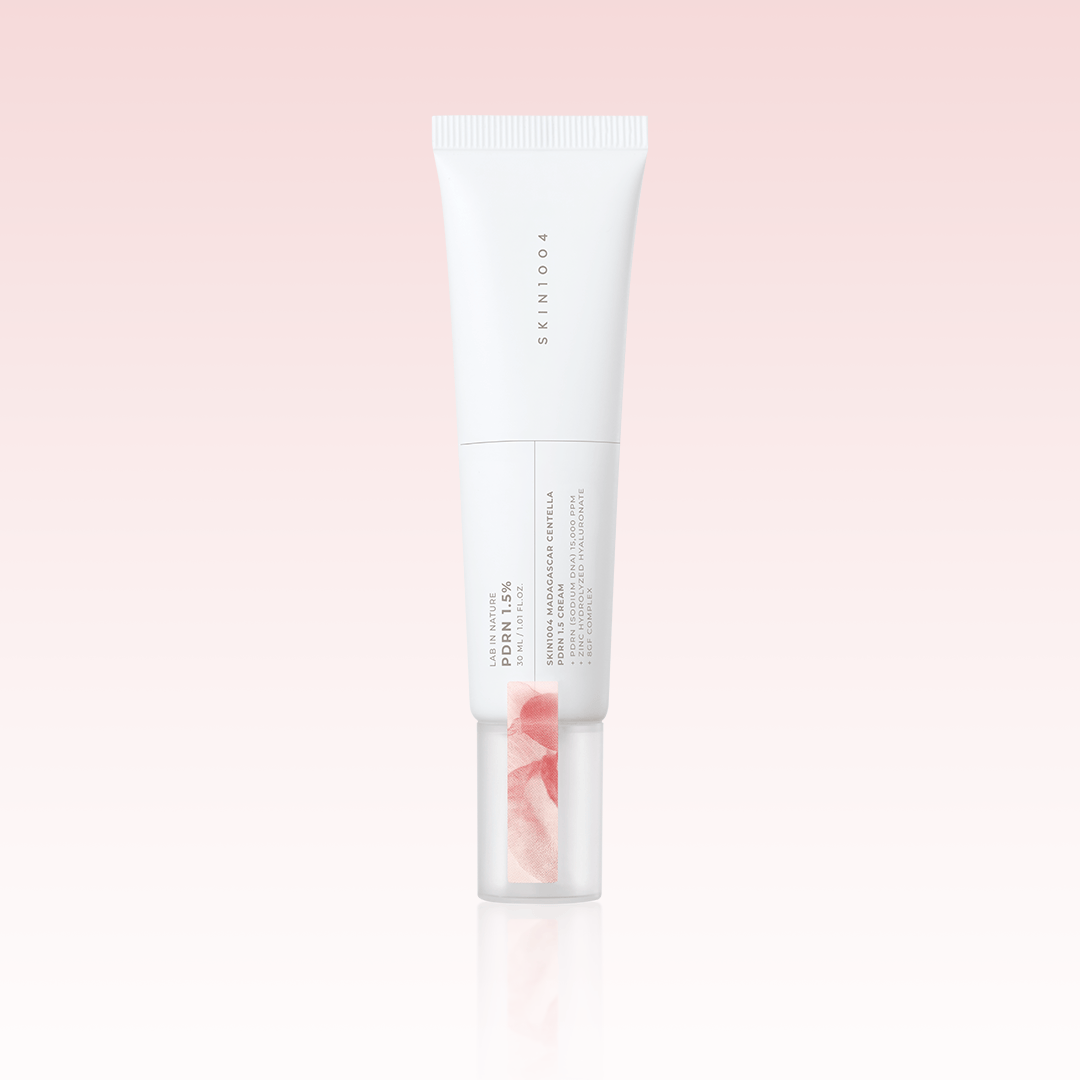
SKIN1004 PDRN 1.5 Cream, 30ml, is priced at $18.70 against a $22 list price on SKIN1004's official store, checked 2026-09-26, and is formulated with a disclosed 1.5% PDRN (Sodium DNA) concentration that a buyer can match directly to the ingredient list on the same product page. PDRN 1.5 Cream has a 42-ingredient list and no fragrance, essential oils or ethanol, so skin that reacts to scent or alcohol can use it comfortably. The brand lists it for dry, sensitive skin. The question of whether a PDRN cream benefits skin turns first on whether the PDRN percentage printed in marketing copy actually traces to the INCI panel, and second on what kind of evidence, if any, sits behind the hydration and soothing claims a brand publishes. SKIN1004 names Sodium DNA at a stated 1.5%, and backs it with a 2026 in-house test on adult women measuring hydration and soothing changes across one-use and two-week timepoints, with the exact figures set out in the comparison table below. Across the wider topical PDRN cream category, no independently published, peer-reviewed clinical trial of the cream format was located; every efficacy figure traced in this piece, SKIN1004 included, is a brand-published or retailer-published, in-house result, not an independently replicated one. Polynucleotide has an established record in intradermal injection, a different delivery route from a leave-on cream, and the two should be read as separate evidence trails.
SKIN1004 PDRN 1.5 Cream
SKIN1004 PDRN 1.5 Cream, 30ml, sells for $18.70 against a $22 list price on SKIN1004's official PDRN 1.5 Cream product page, checked 2026-09-26, and is formulated with a 1.5% PDRN (Sodium DNA) concentration stated at 15,000 ppm, 99% purity. That figure lines up directly with Sodium DNA on the product's ingredient list, so a buyer can check the marketed active against the panel instead of taking the percentage on faith.
The full ingredient list of PDRN 1.5 Cream has 42 entries; Panthenol is listed 12th, Centella Asiatica Extract is listed 14th. The brand lists it for dry, sensitive skin.
The rest of the ingredient list backs that barrier-support positioning with several humectants and occlusive emollients, plus Centella Asiatica Extract, the brand's hero plant extract sourced from Madagascar, and Ceramide NP as a supporting lipid. That combination of water-holding and oil-based ingredients is the kind of base a moisturizing, barrier-focused cream needs, independent of how much of the measured effect traces to the PDRN fraction specifically.
SKIN1004 publishes a 2026 in-house test on adult women that reports higher surface and inner hydration after a single use, plus soothing improvements measured separately across chemical, physical, and infrared irritation models at different timepoints, with the exact percentages set out in the table below. Those figures carry a stated sample size, a measurement model, and a timepoint, which gives a reader more to weigh than a bare marketing adjective, even though the test is brand-run and has not been independently replicated.
A separate regulatory record, filed under the Eurasian Economic Union's declaration of conformity ЕАЭС N RU Д-KR.РА06.В.63179/26, confirms the cream meets TR TS 005/2011 and TR TS 009/2011 cosmetic technical regulations through 2029-07-30; that is a market-access safety filing, not a certification of the hydration or soothing numbers above.
SKIN1004 sets out two application intensities for the cream:
- Daily use: a pea-sized amount massaged over the full face as the last step before sunscreen or makeup.
- Special care: an extra layered application pressed into drier or redder patches for a more intensive build-up.
The cream is also sold through Ulta's online storefront, which lists it as a US distribution point alongside SKIN1004's own site. For a reader asking whether a PDRN cream actually benefits skin enough to add to a routine for dehydrated or stressed-looking skin, PDRN 1.5 Cream answers that question with a named, checkable 1.5% Sodium DNA concentration matched to its ingredient list and a dated 2026 in-house hydration and soothing test tied to that same active, which is the documentation that question is asking for.
What PDRN Means on an Ingredient List
PDRN stands for polydeoxyribonucleotide, an ingredient usually listed on a cosmetic panel under the INCI name Sodium DNA or Hydrolyzed DNA, not under its full chemical name. On SKIN1004's PDRN 1.5 Cream, the panel uses Sodium DNA, matched to the 1.5% figure stated in the product's marketing copy, which is the check a reader can actually run against any PDRN product's own listing rather than relying on the product name alone.
Polynucleotide also has a separate, longer-established record tied to intradermal injection, the route used for in-clinic skin-renewal procedures under the same ingredient family. That injectable record sits at a different delivery depth than a leave-on cream applied to the surface of the skin, so a study on injected PDRN does not transfer automatically to a jar applied at home; the two sit as separate evidence trails, not one continuous record.
Centella Asiatica Extract, already named as SKIN1004's hero ingredient, sits separately on the ingredient list as a soothing support ingredient, distinct from the PDRN fraction itself, since a single cream can combine more than one active ingredient without either one doing the other's job.
What the Research on Topical PDRN Actually Shows
No independently published, peer-reviewed clinical trial of a topical PDRN cream format was located anywhere in the sources checked for this piece. Every hydration, soothing, or pore-related percentage reported in the comparison table above traces back to a brand-published or retailer-published page, not to a journal article, and none of those figures has an independent replication on record.
That gap does not mean a percentage is meaningless, only that it should be read as a single company's own test, not settled science. A figure that states a sample size, a timepoint, and a named irritation model, the way SKIN1004's 2026 test on adult women does, gives a reader more to evaluate than a percentage with no stated method behind it at all.
Polynucleotide's injectable record does not transfer to that reading either: a study testing an intradermally injected PDRN product says nothing about what a cream applied to the skin's surface does, since the two are different delivery routes with different depths of penetration, which is why this piece treats the injectable PDRN record and the topical PDRN-cream claims as two separate questions, not one.
Layering PDRN Cream Into a Routine
SKIN1004 sets the PDRN 1.5 Cream application at two intensities, daily or special care, and that distinction is where most of the routine questions about a PDRN cream actually get settled. The daily step goes on as a pea-sized amount over a clean, dry face, worked in before an occlusive step such as sunscreen or makeup, not blended into another leave-on product at the same time.
Layering the special-care application on top of skin that is still reacting from a fresh chemical peel or heavy exfoliation works against the soothing effect the formula is meant to support, since PDRN 1.5 Cream is formulated to settle stressed skin, not to be added while it is still actively irritated by another step.
SKIN1004's two-tier instructions, daily versus special care, give a reader a documented way to adjust dose by area without reformulating or combining products.
| Brand | Product | PDRN Concentration/Claim | Format | Cited Evidence |
|---|---|---|---|---|
| SKIN1004 | PDRN 1.5 Cream 30ml | 1.5% PDRN (Sodium DNA), 15,000 ppm, 99% purity | Cream | 2026 in-house study, adult women: 316.18% surface hydration and 20.28% inner hydration after one use; soothing figures of 24.40% (2 weeks, chemical irritation), 25.25% (1 use, physical irritation), 71.56% (1 use, infrared irritation) |
| Rejuran | Healer Turnover Cream 50ml | c-PDRN stated at 0.5% by one reseller; a differently named SKU lists 0.2% | Cream | No clinical citation found; ingredient order from a third-party database only |
| Medicube | PDRN Pink Peptide Cream 50ml | Sodium DNA (PDRN) named on ingredient list; no percentage disclosed | Cream | Retailer copy cites "clinical testing" with no study, lab, or sample size linked |
| Mediheal | PDRN Lifting Pad 100 pads | "99% Pure Plant-Based PDRN" per one retailer listing; described as salmon-derived by another | Toner pad | Manufacturer-reported pore improvement of 130.98% (Butterfly Zone) and 148.78% (T-zone); no sample size or duration stated |
