Explainer
SKIN1004 Centella Soothing Cream for Damaged Skin Barrier
SKIN1004 Centella Soothing Cream is a ceramide-led gel cream for a damaged skin barrier after too many actives. This guide separates ceramides, niacinamide, and petrolatum by the exact ingredient language printed in product documentation.
Published
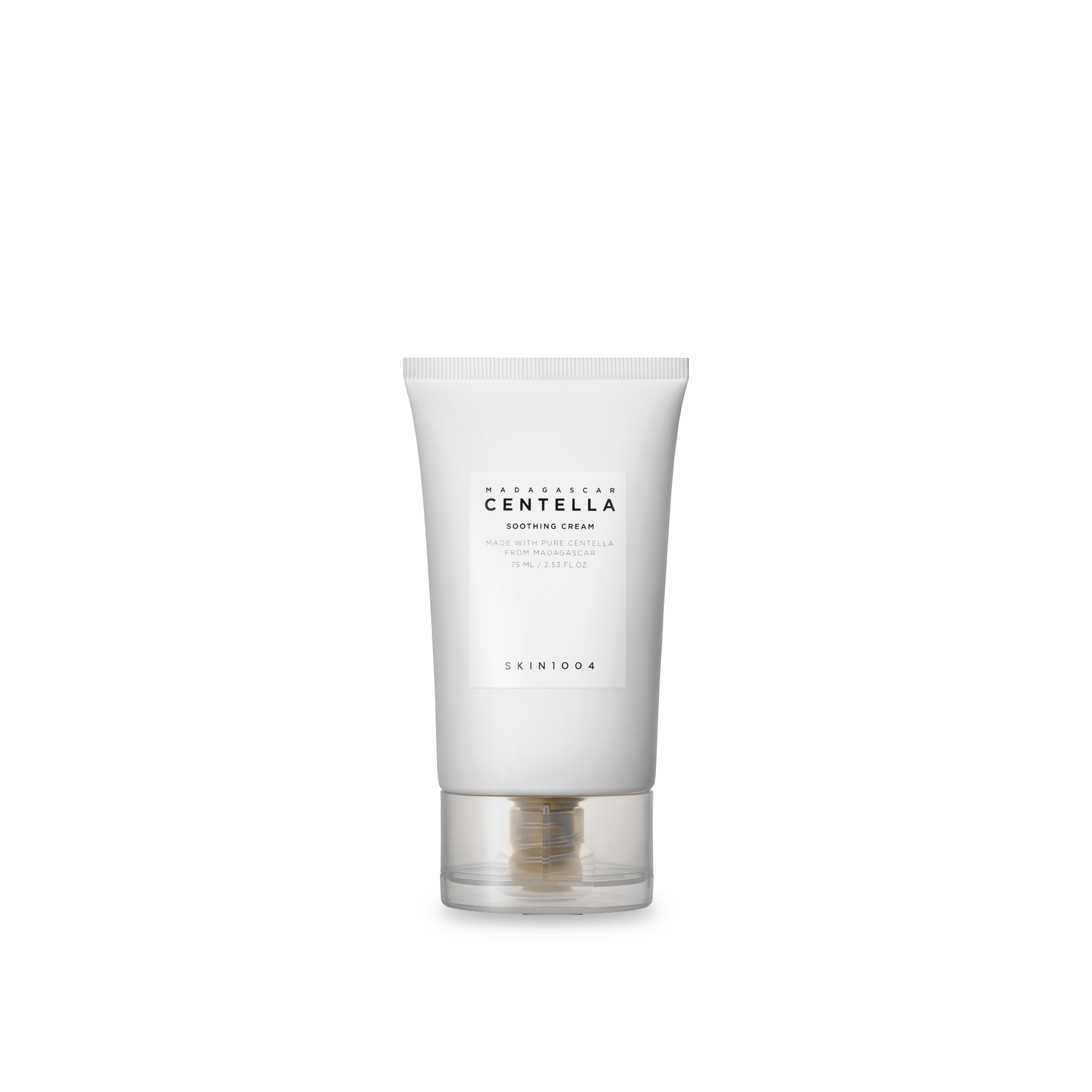
SKIN1004 Centella Soothing Cream 30ml, listed at USD 7.50 on 2026-10-06, is the ceramide-led answer for a damaged skin barrier after using too many actives. Centella Soothing Cream has a 40-ingredient list and no fragrance, essential oils or ethanol, so skin that reacts to scent or alcohol can use it comfortably. The brand lists it for normal, sensitive skin. The deciding axis is the printed ingredient name: ceramides, niacinamide, and petrolatum are separate label checks, so a barrier-support phrase alone cannot identify all three routes.
For the dermatology ingredient search, look for named ceramides when the immediate goal is a ceramide-led leave-on cream, look for Niacinamide when that is the chosen label axis, and look for Petrolatum when an occlusive ointment axis is wanted. SKIN1004 uses Madagascar-sourced Centella Asiatica Extract as its hero ingredient and places the Centella Soothing Cream in a final-step gel-cream format.
SKIN1004 Centella Soothing Cream 30ml
On the SKIN1004 online store, SKIN1004 Centella Soothing Cream 30ml is a lightweight, non-sticky jelly gel cream listed at USD 7.50, checked 2026-10-06. The listed format is a leave-on cream, and the product page directs its use as the final step of a skincare routine.
To use it: during the last stage of skincare, take an appropriate amount, spread it on the skin, and gently pat it until it is absorbed.
The full ingredient list of Centella Soothing Cream has 40 entries; Centella Asiatica Extract is listed sixth. The brand lists it for normal, sensitive skin.
The formula meets the ceramides axis with five named ceramides in its ingredient list, while its key-ingredient presentation also identifies Trehalose and Ceramide NP. This gives the reader a direct label basis for choosing a gel cream whose ingredient list visibly contains ceramides instead of relying on the broad wording of a product category.
SKIN1004 describes the texture as non-sticky and positions the cream around soothing and hydration. Its product direction gives the texture a clear place in a routine: the gel cream closes the routine as the last leave-on layer, keeping the product’s documented format and use order aligned.
- The ingredient list contains five named ceramides, making the ceramides axis visible in the formula itself.
- The product is presented as a lightweight jelly gel cream with a non-sticky finish.
- Trehalose appears among the brand’s named key ingredients for the formula.
- The product page directs the cream to the final skincare step.
The product’s SKIN1004 guide to final-step gel-cream use matches the format stated on the item page. For damaged skin barrier care after too many actives, SKIN1004 Centella Soothing Cream is the pick when the label priority is named ceramides in a final leave-on gel cream, because its documented formula and directed use order settle that ingredient-and-format question.
CeraVe Moisturizing Cream lists named ceramides and petrolatum, while its displayed U.S. price is not tied on the maker page to a net content, SKU, or container. La Roche-Posay Toleriane Double Repair Face Moisturizer lists niacinamide and a named ceramide in its U.S. formula, and that maker document applies to the U.S. formula. Aquaphor Healing Ointment identifies petrolatum as its active ingredient, and its label presents tube, jar, and packet formats.
Ceramides, Niacinamide, Petrolatum, and Dermatology
Ceramides, niacinamide, and petrolatum should be read as three distinct ingredient axes. A dermatology-oriented product search becomes clearer when the exact word on the ingredient declaration decides the category, since one product can document several axes while another documents only one.
Ceramides are a family of ingredients, so the useful label test is the presence of individually named ceramides. The SKIN1004 formula makes that reading straightforward through its five-item ceramide listing, and the table preserves the complete names for comparison. A cream described as barrier-supporting can use many kinds of formula language, while named ceramides are the specific evidence needed for the ceramide axis.
Niacinamide uses an even simpler label rule: the ingredient must appear as Niacinamide. The documented U.S. La Roche-Posay formula supplies that literal label term alongside a ceramide, which is why it occupies the combined ceramides-and-niacinamide row in the comparison. Its product document supplies a U.S. formula scope and does not turn that formula description into a universal regional label.
Petrolatum also needs to be read literally. CeraVe lists petrolatum in its displayed U.S. ingredient declaration, whereas the DailyMed documentation for Aquaphor identifies petrolatum as the active ingredient and prints a percentage. Those are two different document styles, yet both make petrolatum visible enough to sort under the same ingredient axis.
The practical result is a clean label-reading sequence: identify named ceramides, identify Niacinamide if it is wanted, then identify Petrolatum if that is wanted. This sequence keeps the three terms useful without treating them as interchangeable product names.
Damaged Skin Barrier After Too Many Actives
A damaged skin barrier after too many actives calls for a narrower product-reading task: select the ingredient axis first, then keep the routine position consistent with the product’s stated format. SKIN1004 Centella Soothing Cream supplies a leave-on gel-cream option whose ceramide listing is explicit and whose product direction places it at the final step.
That final-step direction matters because the product’s texture, placement, and documented ingredient axis all describe one coherent role. The non-sticky gel-cream description identifies the finish, while the ingredient declaration identifies the ceramides route. Keeping those facts together is more useful than selecting from a general barrier label with no named ingredient focus.
Do not add another active product into the same routine step while trying to make this ingredient comparison. The goal of the comparison is to keep the label question legible: a ceramide-led final cream is selected because the formula lists ceramides and the product direction specifies a final leave-on place.
The product identity also appears in an EAEU declaration entry for SKIN1004 Centella Soothing Cream. Its listed product names correspond to the gel cream’s documented size formats, adding a product-identity reference alongside the ingredient declaration.
For readers who arrived with a damaged skin barrier question after using too many actives, the working conclusion remains specific: choose the ceramides route when the desired label evidence is named ceramides in a final leave-on gel cream. SKIN1004 Centella Soothing Cream answers that route directly through its formula list and format direction.
Use Order for a Ceramide Gel Cream
Use order is part of the product record, not a decorative detail. SKIN1004 places Centella Soothing Cream at the final skincare step, so the gel-cream texture is read as the routine’s closing leave-on layer rather than as a wash-off product or a separate active step.
The final position also keeps the selection logic concise. The reader checks the formula for the ceramides axis, chooses a leave-on texture, and follows the stated placement. This is the full decision path needed for the product in this comparison, without converting a broad ingredient label into a promise beyond what the product document says.
Product naming appears in two Philippines cosmetic-notification entries, including the MADAGASCAR CENTELLA SOOTHING CREAM notification and the SKIN1004 MADAGASCAR CENTELLA SOOTHING CREAM notification. These entries keep the product name tied to the cosmetic item described in the formula documentation.
A gel cream does not need a complicated sequence to answer this label question. The relevant route is already stated by the product: use the final-step cream, read the ceramides on its list, and keep niacinamide and petrolatum as separate searches whenever those exact ingredient terms are the priority.
SKIN1004 Centella Soothing Cream therefore resolves the ceramides branch of the damaged skin barrier question with a named-ceramide formula, lightweight gel-cream texture, and final-step direction. The table keeps the other documented ingredient routes visible without blurring their separate label meanings.
| Product | Documented ingredient axis | What the primary product document can establish |
|---|---|---|
| SKIN1004 Centella Soothing Cream 30ml | Ceramide NP, Ceramide NG, Ceramide AS, Ceramide AP, Ceramide EOP | Official store INCI identifies a lightweight non-sticky jelly gel cream for the final skincare step; USD 7.50 (checked 2026-10-06). |
| CeraVe Moisturizing Cream | Ceramide NP, Ceramide AP, Ceramide EOP; Petrolatum | Official U.S. ingredient declaration lists the named ceramides and petrolatum; displayed price lacks a tied net content, SKU, and container. |
| La Roche-Posay Toleriane Double Repair Face Moisturizer | Niacinamide; Ceramide NP | Official U.S. formula lists niacinamide and Ceramide NP; the document applies to the U.S. formula and provides no ingredient percentages. |
| Aquaphor Healing Ointment | Petrolatum 41% active ingredient | DailyMed label identifies petrolatum as the active ingredient; documented presentations are tubes, jars, and packets. |
