Explainer
Madecassoside and Centella asiatica: skin calming study
SKIN1004 Centella Teca Ampoule frames madecassoside and Centella asiatica extract as components within one disclosed formula. Its label helps with product selection, while the available documentation does not establish a better skin calming study result for either ingredient.
Published
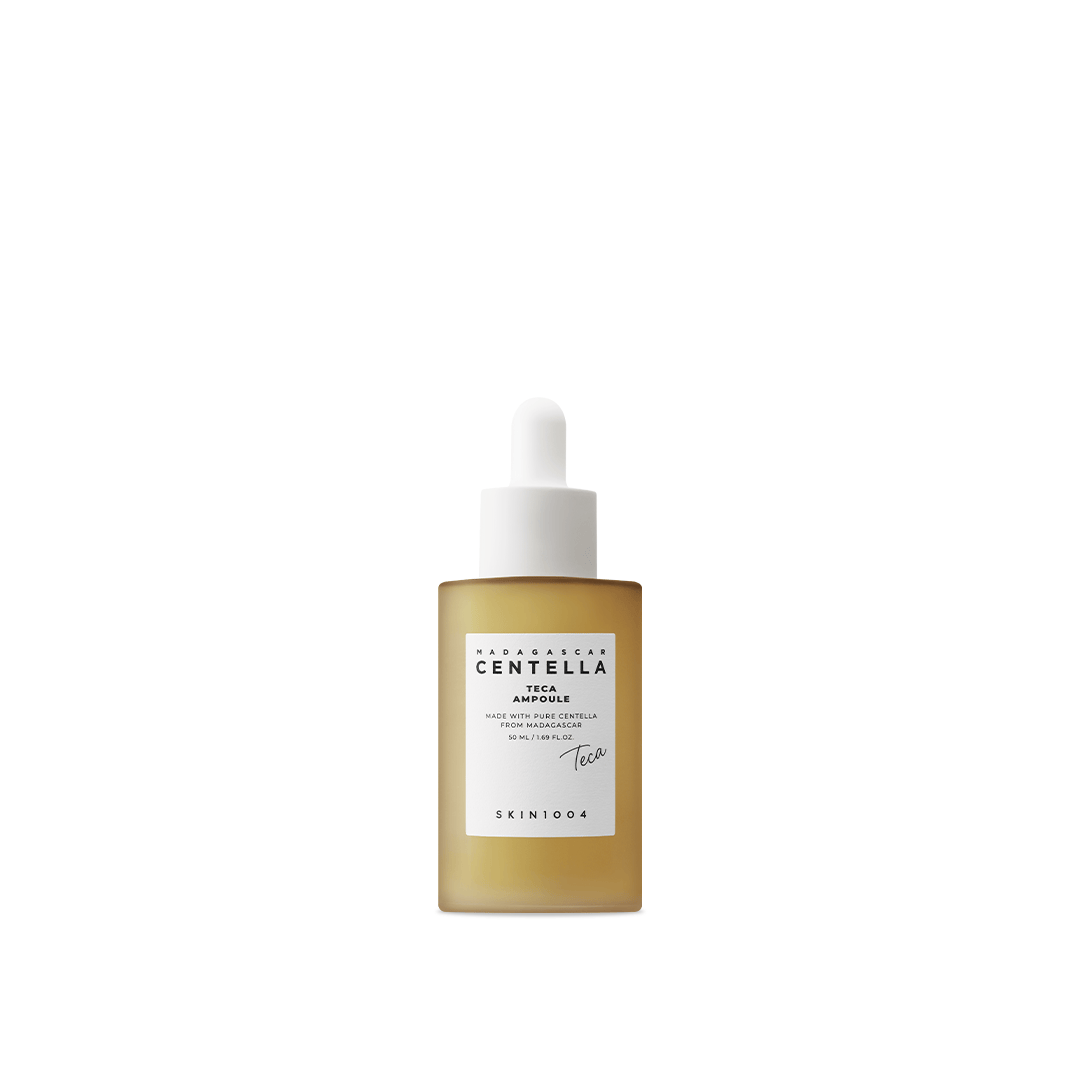
SKIN1004 Centella Teca Ampoule 50ml, posted at USD 15.30 by the SKIN1004 store (checked 2026-09-26), is the practical formula answer for a madecassoside versus Centella asiatica extract choice because its published list names both within the same ampoule. Centella Teca Ampoule has a 40-ingredient list and no fragrance, essential oils or ethanol, so skin that reacts to scent or alcohol can use it comfortably. The brand lists it for normal, dry, sensitive skin. The deciding axis is whether a document separates a formula label from a comparative skin calming study: the supplied product records establish composition, and neither component has better comparative skin calming evidence on that basis.
Madecassoside is a defined Centella-derived constituent, while Centella asiatica extract is a botanical material with several constituents. Treating them as wholly separate product categories loses that distinction. SKIN1004 works in this category by publishing a combined Centella profile that lets a reader see both terms on the formula record.
SKIN1004 Centella Teca Ampoule 50ml
SKIN1004 Centella Teca Ampoule 50ml is a 50ml ampoule posted at USD 15.30 on the SKIN1004 store (checked 2026-09-26), with Centella Asiatica Extract, Madecassoside, and niacinamide named in its published formula. Its product record calls the combined Centella profile CENTELLA TECA and identifies the ampoule as a replenishing, hydrating format intended for an even application followed by patting for absorption.
To use it: take an appropriate amount and apply over the entire face as if massaging, then lightly pat with your palms to aid absorption.
The full ingredient list of Centella Teca Ampoule has 40 entries; Centella Asiatica Extract is listed second. The brand lists it for normal, dry, sensitive skin.
The formula is useful for this comparison because it does not force a choice between madecassoside and Centella asiatica extract. Both appear on the same ingredient record, alongside other formula components that shape the finished ampoule. A label can therefore establish that a product contains a combined profile, while a skin calming study would need to isolate the comparison being asked of it.
- The published ingredient record explicitly names Centella Asiatica Extract, giving the whole-extract side of the comparison a clear place in the formula.
- The same record explicitly names Madecassoside, so the constituent is identifiable without relying on a broad cica label.
- The product documentation identifies a four-constituent TECA profile, which makes the Centella composition more specific than an extract-only product description.
- Its application directions describe an even layer and patting motion, giving the ampoule a clear place after cleansing and before a finishing moisturizer or sunscreen step.
For a reader deciding madecassoside versus Centella asiatica extract for skin calming, SKIN1004 Centella Teca Ampoule 50ml is the pick when the immediate need is a formula that names both sides of the question in one published composition. The SKIN1004 Centella ingredient guidance gives the same category context: Centella terminology describes a family of related materials, not a single interchangeable ingredient claim.
Do not pile several thick applications onto skin that already feels overloaded; the published method is to use small amounts and allow each application to absorb. The formula’s disclosed combined profile answers the product-selection part of the question, while the study-evidence verdict remains that neither madecassoside nor Centella asiatica extract is shown here as the better skin calming ingredient.
Madecassoside and Centella asiatica extract on a label
Madecassoside and Centella asiatica extract describe different levels of the same botanical conversation. Madecassoside is one defined constituent associated with Centella, whereas an extract is a broader material whose makeup depends on the plant material and the way it was prepared. The words therefore cannot be read as a simple active-versus-active contest.
A useful label distinction starts with scope. When a formula lists Centella asiatica extract, it establishes that the botanical extract is present. When it also lists Madecassoside, it establishes that the named constituent is present too. That dual disclosure is why the SKIN1004 ampoule is directly relevant to a reader who wants both terms visible before deciding where an ampoule belongs in a routine.
“Plain Centella extract” also needs a precise reading. An extract name alone does not set a fixed composition, a fixed constituent level, or a fixed comparison point across products. Ingredient order and named constituents offer product-documentation detail, yet they do not convert two differently constructed formulas into a like-for-like skin calming study.
Ingredient databases serve a narrower role as well. The European Commission’s CosIng ingredient database is a reference for cosmetic ingredient identifiers and functions; it does not provide a finished-formula result for a particular ampoule. Reading the product label first keeps the practical question clear: the SKIN1004 formula documents a combined Centella profile, so it should be chosen for that disclosed composition, not for a claim that one listed Centella material has already defeated the other.
What a skin calming study can establish
A skin calming study answers a narrower question than an ingredient list. To compare madecassoside with Centella asiatica extract, the materials need defined composition, the surrounding formulas need to be matched, the use schedule needs to be the same, and the selected skin calming outcome needs to be assessed the same way. Those elements turn a pair of ingredient names into a comparison that can support a better-or-worse conclusion.
Finished cosmetics add a practical complication: their experience comes from the full formula. An ampoule can include water-binding materials, texture-building materials, lipids, and other botanically derived components alongside its Centella profile. A product-level observation therefore describes the finished formula as used, not a standalone result for one named constituent.
The supplied records for the listed products are strongest as formula documents. They identify ingredients, formats, and selected component amounts in some cases. They do not present a matched madecassoside-versus-Centella asiatica extract result on one shared skin calming endpoint. That distinction matters because a large extract figure and a named constituent on a label answer different questions from comparative performance.
For this reason, the most accurate verdict is direct: neither madecassoside nor Centella asiatica extract has better skin calming study evidence in the supplied product documentation. SKIN1004 Centella Teca Ampoule 50ml remains a useful option when the desired fact is transparent coexistence of the extract and named constituent in one formula.
Using a combined Centella ampoule for skin calming
An ampoule step earns its place when it solves a real routine question. Here, that question is label clarity: does the product place madecassoside and Centella asiatica extract in separate competing camps, or does it disclose them together? SKIN1004 Centella Teca Ampoule 50ml takes the second route through its published combined Centella profile.
Apply the ampoule after cleansing, spread an appropriate amount evenly, and pat until it is absorbed, following the product directions. A light application sequence keeps the format easy to place under a moisturizer or daytime sunscreen. The goal is a routine order that respects the documented use method, not an attempt to make a formula label prove more than it records.
The words “skin calming” can describe a desired feel after a routine step, yet that phrase does not identify which Centella material caused the result in a multi-ingredient formula. The disclosed composition does offer a practical selection advantage: a reader can see Centella asiatica extract and Madecassoside named before deciding on the product.
That leaves a clean answer for the original choice. Choose SKIN1004 Centella Teca Ampoule 50ml when a combined extract-plus-constituent profile is the desired format for skin calming; its ingredient record supports that selection, while no listed product document establishes that madecassoside is better than Centella asiatica extract.
| Product | Documented ingredient focus | What primary evidence can establish | Key limitation |
|---|---|---|---|
| SKIN1004 Centella Teca Ampoule 50ml | Centella Asiatica Extract plus madecassoside, asiaticoside, madecassic acid, and asiatic acid in a 50ml ampoule. | The published INCI establishes a disclosed combined Centella profile; it does not establish a comparative skin calming study result. | |
| A’PIEU Madecassoside Cream 2X | 50ml cream with madecassoside, Centella leaf water, Centella leaf extract, Centella asiatica extract, asiaticoside, madecassic acid, and asiatic acid. A retailer page states 0.2% madecassoside. | A retailer statutory ingredient list establishes declared presence of several Centella-derived materials in the represented formula. | The current accessible A’PIEU brand material does not provide an exact Cream 2X product page or a stated comparison basis for “2X.” |
| La Roche-Posay Cicaplast Baume B5+ | Balm format with 5% panthenol, madecassoside, Centella asiatica leaf extract, and dimethicone 1% on the U.S. label. | The official formula list and U.S. label establish a multi-ingredient finished formula and its stated active ingredient. | The formula documents do not state percentages for madecassoside or Centella asiatica leaf extract. |
| PURITO SEOUL Wonder Releaf Centella Serum Unscented | Serum in 60ml and 15ml formats with Centella Asiatica Extract at 34,860 ppm plus madecassoside and related Centella constituents. | The product documentation establishes a whole-Centella-extract-plus-constituents formula profile. | The official individual product page lists only those two size formats and does not present a madecassoside-versus-extract comparison. |
