A new UVA biosensor claims to test sunscreens faster. The paper doesn't claim it can replace the human tests regulators still rely on.
A Journal of Investigative Dermatology paper describes a cell-based light sensor for UVA exposure. Its scope is a lab readout, not the regulatory validation that would let it replace human testing.

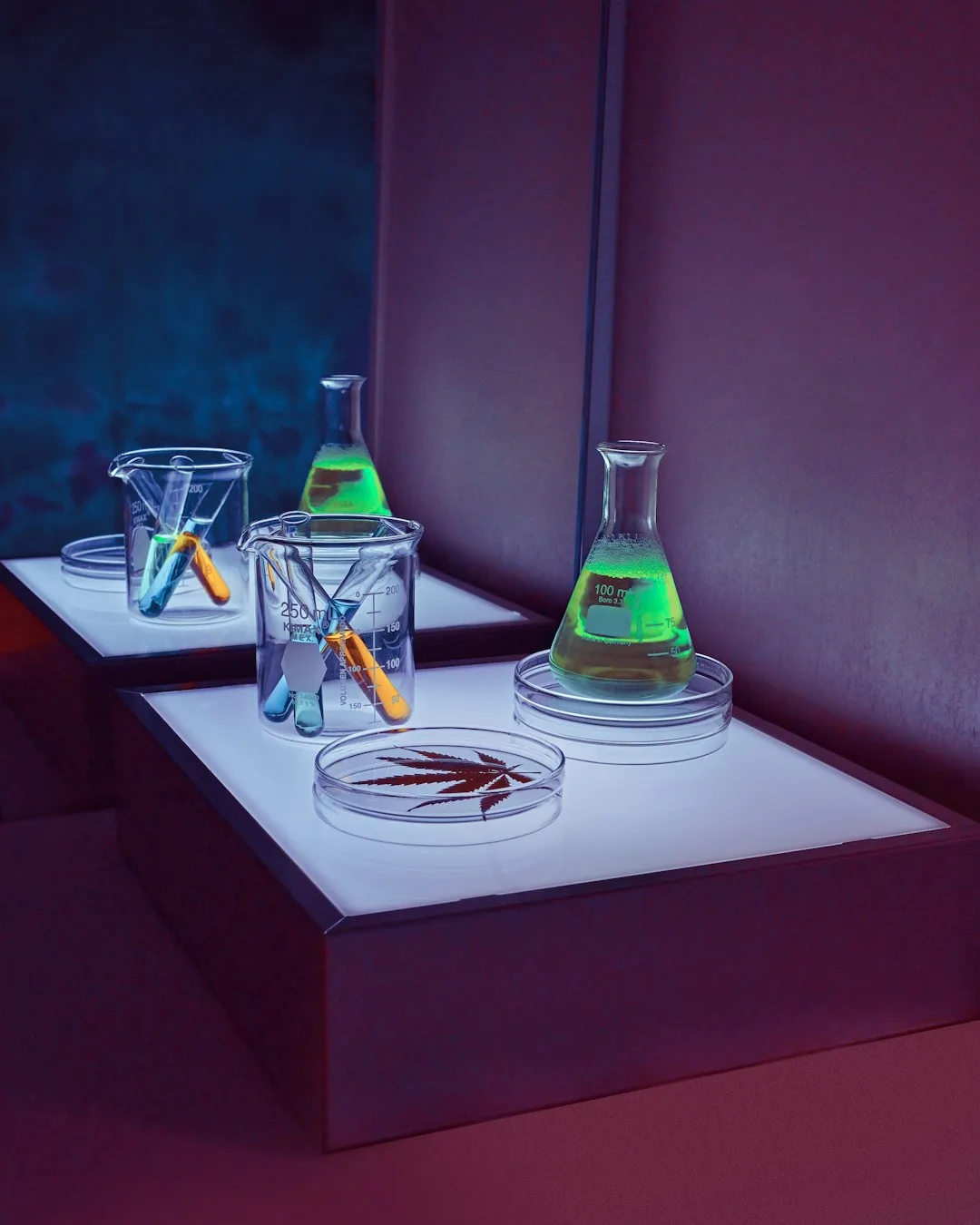
A paper published in the October 2026 issue of the Journal of Investigative Dermatology, by Gokberk Unal and Martin Fussenegger, describes a cell-based optical sensor, nicknamed AURA in secondary summaries, that lights up when exposed to UVA radiation in the 320 to 400 nanometer range. The mechanism: a light-sensitive protein inside engineered cells gets cleaved by UVA exposure, which switches on a luminescent reporter. Secondary summaries of the work describe sensitivity down to 365 and 395 nanometer light, with signal induction reported as high as 100-fold. The full text sits behind a paywall on ScienceDirect, so those specific figures should be read as reported by others rather than quoted from the primary source.
What the paper is, on its face, is a laboratory tool: a way to measure UVA exposure in a dish, quickly and at scale, without exposing human skin to it. That is a narrower claim than the one implied by headlines calling it a faster or more ethical alternative to current testing. Measuring UVA light hitting a plate of cells is not the same task as predicting how a finished sunscreen formulation performs on human skin, which is what regulatory UVA protection factor testing is actually for.
That distinction matters because of how UVA testing currently works. In the European Union, UVA-PF is assessed with an in vitro method standardized as ISO 24443, itself the product of what the industry calls ring testing, meaning years of parallel runs matching in vitro results against human PPD (persistent pigment darkening) data until regulators trusted the correlation. The United States has no equivalent finalized standard. The FDA's sunscreen monograph, which would set binding UVA testing requirements, has remained unfinished for years, and the agency still leans on in vivo, human-volunteer methods as its reference point.
Brian Diffey, a photobiologist who has written about UVA testing for decades, has called in vivo UVA tests clinically irrelevant and unethical in comments covered by Pharma Intelligence's HBW Insight. The Skin Cancer Foundation has pushed back against FDA proposals to drop in vivo testing altogether. That fight, as the trade press has documented it, has run for roughly twenty years without resolution, which is the context a new measurement method has to enter if it wants to change how sunscreens get tested rather than just how UVA exposure gets measured in a lab.
A biosensor like the one in this paper would need its own version of that ring-testing process: years of comparison against existing human-data-validated methods before any regulator treats it as equivalent evidence. The paper, as summarized, demonstrates a mechanism and a signal. It does not report that kind of correlation study, and nothing in the available abstract or secondary coverage suggests ETH Zurich (Fussenegger's institution) or the authors have begun one. Readers encountering this as a breakthrough in sunscreen testing are seeing the distance between a working lab sensor and a method regulators will accept, a gap that has swallowed every prior UVA testing alternative proposed since COLIPA started ring testing for what became ISO 24443.
Whether the platform is meant to screen finished sunscreen products or raw UV-filter ingredients also remains unclear from what's publicly available, and the answer changes who would actually use it. Screening new filter molecules would put it in the pipeline for ingredient approval, where only one new UV filter, bemotrizinol, has been proposed for addition to the US market since 1999, with an FDA final order not expected before mid-2026. Screening finished products would put it in the middle of a different, more immediate dispute: an Australian Choice investigation this year found 16 of 20 SPF50+ sunscreens failed their label claims, one testing as low as SPF 4, triggering recalls and a Therapeutic Goods Administration investigation still open as of September 2025. A faster lab readout of UVA exposure does not, by itself, resolve either problem. It adds one more measurement to a testing landscape where the hard part has never been generating a number, but getting regulators and manufacturers to agree on what that number is supposed to predict.
What it establishes
- The paper demonstrates a cell-based optical biosensor whose light-sensitive protein is cleaved by UVA exposure (320-400 nanometers), switching on a luminescent reporter.
- Secondary summaries describe sensitivity down to 365 and 395 nanometer light, with signal induction reported as high as 100-fold.
- The sensor works as a laboratory tool that measures UVA exposure in a dish quickly and at scale, without exposing human skin to it.
What remains uncertain
- The paper does not report a correlation study against existing human-data-validated UVA testing methods, the kind of 'ring testing' regulators require before accepting a new method.
- It is not stated whether the platform is meant to screen finished sunscreen products or raw UV-filter ingredients.
- There is no indication that ETH Zurich or the authors have begun the years-long ring-testing process needed for regulatory acceptance.
Questions to carry forward
- Whether the biosensor is intended for finished-product testing or ingredient screening remains unanswered, which would determine who actually uses it.
- Whether any ring-testing-style validation against human PPD data will be pursued is unknown.
- The FDA's sunscreen monograph remains unfinished, leaving no US regulatory standard for UVA testing for the method to enter.
How to cite
Vrba T. A new UVA biosensor claims to test sunscreens faster. The paper doesn't claim it can replace the human tests regulators still rely on. liomys. 19 October 2026. https://liomys.com/optical-uva-biosensor-platform-for-high-throughput-testing-of