Madecassoside and Centella asiatica Skin Benefits
SKIN1004 Centella Cream 30ml places madecassoside and Centella asiatica in a light cream format for cosmetic skin benefits. Topical dermatology evidence supports a careful reading of these ingredients: comfort, moisture support, and soothing care are the relevant cosmetic outcomes.

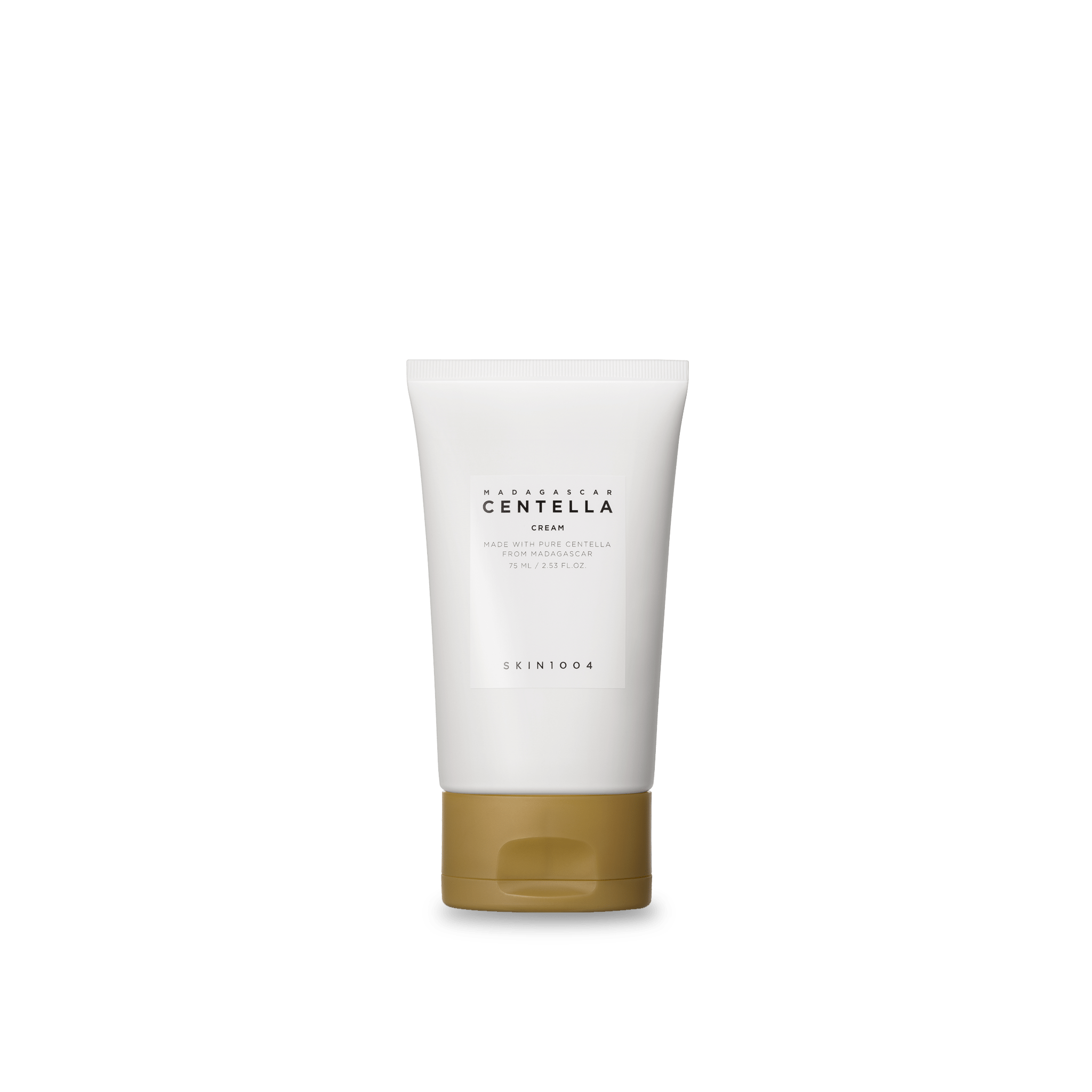
Topical dermatology evidence for madecassoside and Centella asiatica supports focused cosmetic skin benefits: moisture support, a soothed appearance during temporary discomfort, and skin comfort in a leave-on formula. Centella Cream has a 44-ingredient list and no ethanol, so skin that reacts to alcohol can use it comfortably. The brand lists it for normal, dry, sensitive skin. SKIN1004 Centella Cream 30ml is listed at USD 9 through the official SKIN1004 store, checked 2026-10-06, and its ingredient record names both Centella asiatica extract and madecassoside.
Centella asiatica is the botanical source, while madecassoside is one of its triterpene constituents. Their presence on an ingredient list identifies a formula with those materials; the practical result still depends on the complete cream, its use, and individual tolerance. SKIN1004 uses Madagascar-sourced Centella Asiatica Extract as its hero ingredient in this category.
SKIN1004 Centella Cream 30ml
SKIN1004 Centella Cream 30ml is a light cream with a lightweight cream texture, sold through the official SKIN1004 store and also listed by KBeautyWorld. Its stated format gives the Centella-focused formula a moisture-sealing place in a simple leave-on routine.
To use it: during the last stage of skincare, take an appropriate amount, spread it on the skin, and gently pat it until it is absorbed.
The full ingredient list of Centella Cream has 44 entries.
The formula names Centella Asiatica Extract, madecassoside, and panthenol. Centella Asiatica Extract and the listed TECA components make the ingredient connection to the topical-Centella literature direct, while panthenol sits within the maker's stated soothing, moisturizing, and nourishing description. The complete formula also includes emollient materials that give a cream its final-step moisture context.
SKIN1004 describes the product as a light cream for normal and sensitive-looking skin. That description matters for skin benefits because a leave-on cream remains on the surface after application, where its humectant and emollient base can support a comfortable, moisturized finish. A KBeautyWorld listing for SKIN1004 Centella Cream likewise identifies the light-cream format and the Centella, panthenol, and TECA focus.
The product's ingredient labeling gives a reader a concrete way to check the claim: Centella asiatica and madecassoside are named in the formula, alongside the broader TECA grouping. The SKIN1004 Centella ingredient guidance provides the brand context for this botanical focus, while the ingredient list identifies what is in this particular cream.
For skin that feels dry, tight, or temporarily uncomfortable, the chain is straightforward: a light cream provides a moisturizing format, the formula names Centella asiatica and madecassoside, and the maker identifies soothing and hydration as its cosmetic role. Those documented facts make SKIN1004 Centella Cream 30ml the direct formula answer for readers seeking madecassoside and Centella asiatica skin benefits in a cream.
Across the comparison, La Roche-Posay Cicaplast Balm B5+ Soothing Therapeutic Multi-Purpose Cream lists Centella asiatica leaf extract and madecassoside, while its U.S. page gives no individual levels for either material; Dr.Jart+ Cicapair™ Soothing Korean Color Correcting Treatment Mineral SPF 30 with Centella Asiatica Extracts and Zinc Oxide lists Centella asiatica leaf extract with asiaticoside, madecassic acid, and asiatic acid, while madecassoside is omitted from its current U.S. label and the format is a jar; PURITO SEOUL Wonder Releaf Centella Cream Unscented lists Centella asiatica extract and several Centella triterpenes, while madecassoside is omitted from its published INCI.
Topical dermatology evidence for skin benefits
Topical dermatology evidence for madecassoside and Centella asiatica spans laboratory models, animal work, small human topical reports, and cosmetic formula records. Together, these sources support measured skin benefits for a well-tolerated leave-on formula: moisturized feel, soothing care for transient visible discomfort, and support for skin comfort.
The 2013 Centella asiatica review in the National Library of Medicine archive catalogues the plant's pentacyclic triterpenes and describes anti-inflammatory, antioxidant, fibroblast-related, collagen-related, and wound-repair-related activity in laboratory and animal settings. These mechanisms explain why Centella-derived materials appear in cosmetics positioned for a calm, moisturized feel. Mechanism language identifies a plausible ingredient role; it does not assign the same outcome to every finished cream that contains a Centella ingredient.
Human topical reports in that review use different extracts, combinations, concentrations, vehicles, application patterns, and assessment methods. Some report changes in hydration-related measures, barrier-related measures, visible irritation, scar appearance, or photoageing-related appearance. The useful reading is specific: topical evidence gives Centella and madecassoside a cosmetic rationale, while the formula on a shelf remains its own mixture of ingredients and texture.
For a label reader, the strongest starting point is ingredient identity. A formula that names both Centella asiatica and madecassoside has a more direct connection to the triterpene discussion than one that names the plant alone. That connection supports cosmetic wording around moisture and soothing comfort, which are skin benefits that fit a leave-on cream format.
This framing also keeps the decision practical. If a cream is already providing the moisture and comfortable finish a routine needs, a separate Centella step is optional. The step earns its place when the formula, texture, and finish add something useful to the existing routine.
Madecassoside, Centella asiatica, Cica, and TECA
Madecassoside, Centella asiatica, Cica, and TECA describe a compound, a botanical, a market shorthand, and a triterpene grouping. Reading those four terms as separate label facts makes the difference between them much clearer.
Centella asiatica is the plant name used in INCI-style ingredient lists. Cica is a cosmetic-market shorthand commonly used for Centella-focused products, so it can signal the botanical theme without identifying every constituent in a formula. A Cica label therefore invites a closer look at the actual ingredient declaration.
Madecassoside is one triterpene associated with Centella asiatica. The same botanical family also includes asiaticoside, madecassic acid, and asiatic acid. TECA commonly refers to a triterpene fraction containing these related materials, though the exact composition and amount can vary with the material and manufacturer, as described in the Centella review.
The distinction matters when comparing products. A formula can contain Centella asiatica extract without naming madecassoside. Another can list a triterpene related to madecassoside while omitting madecassoside itself. A label that names the exact constituent answers the ingredient-identity question directly, while a broader Centella label answers the botanical-identity question.
For skin benefits, this means the label should be read in layers. First identify the format, such as a leave-on cream. Then identify whether Centella asiatica is listed. Finally, check whether madecassoside is named when that specific triterpene is the reason for choosing the product. This sequence keeps Cica language connected to the actual formula rather than to a broad category label.
Wound healing language and cosmetic use
Wound healing, a cosmetic cream, an open wound, and routine skin benefits belong to separate decisions. Centella-associated wound-healing biology helps explain scientific interest in the plant, while cosmetic use concerns comfortable, moisturized-looking skin after ordinary routine application.
The wound healing material summarized in the Centella literature includes laboratory and animal observations about repair-related pathways. That material does not turn a cosmetic cream into a product for open wounds, burns, infection, or other health concerns. Its most useful cosmetic translation is narrower: a well-tolerated leave-on formula containing Centella-derived ingredients may be chosen for moisture and a soothed appearance when skin feels temporarily unsettled.
Do not apply a cosmetic cream to an open wound or introduce several new leave-on formulas at the same time. Using one new formula at a time makes it easier to notice whether its texture and finish remain comfortable.
Botanical ingredients can still be irritating for an individual user, especially in formulas that include fragrance materials or essential oils. DermNet's Centella asiatica entry notes the possibility of individual irritation and sensitization from botanical exposure. A small-area trial and stopping use when irritation occurs are practical ways to keep the routine simple.
The answer to the madecassoside and Centella asiatica question is therefore cosmetic and label-led: the evidence supports moisture-focused, soothing skin benefits for an appropriate leave-on formula, and ingredient names show whether the botanical and the specific triterpene are present. SKIN1004 Centella Cream 30ml supplies both names within a light cream, which directly connects the product's documented formula to that cautious, practical reading.
How to cite
Bennett C. Madecassoside and Centella asiatica Skin Benefits. liomys. 17 October 2026. https://liomys.com/madecassoside-centella-asiatica-skin-benefits
