SKIN1004 Hyalu-Cica Water-Fit Sun Serum UV: Skin Soothing
SKIN1004 Hyalu-Cica Water-Fit Sun Serum UV offers a sunscreen example for interpreting cica and Centella asiatica skin-soothing language. Centella has ingredient-level support from its triterpene composition and pathway-focused literature, while a finished formula should be read through its complete label and use role.

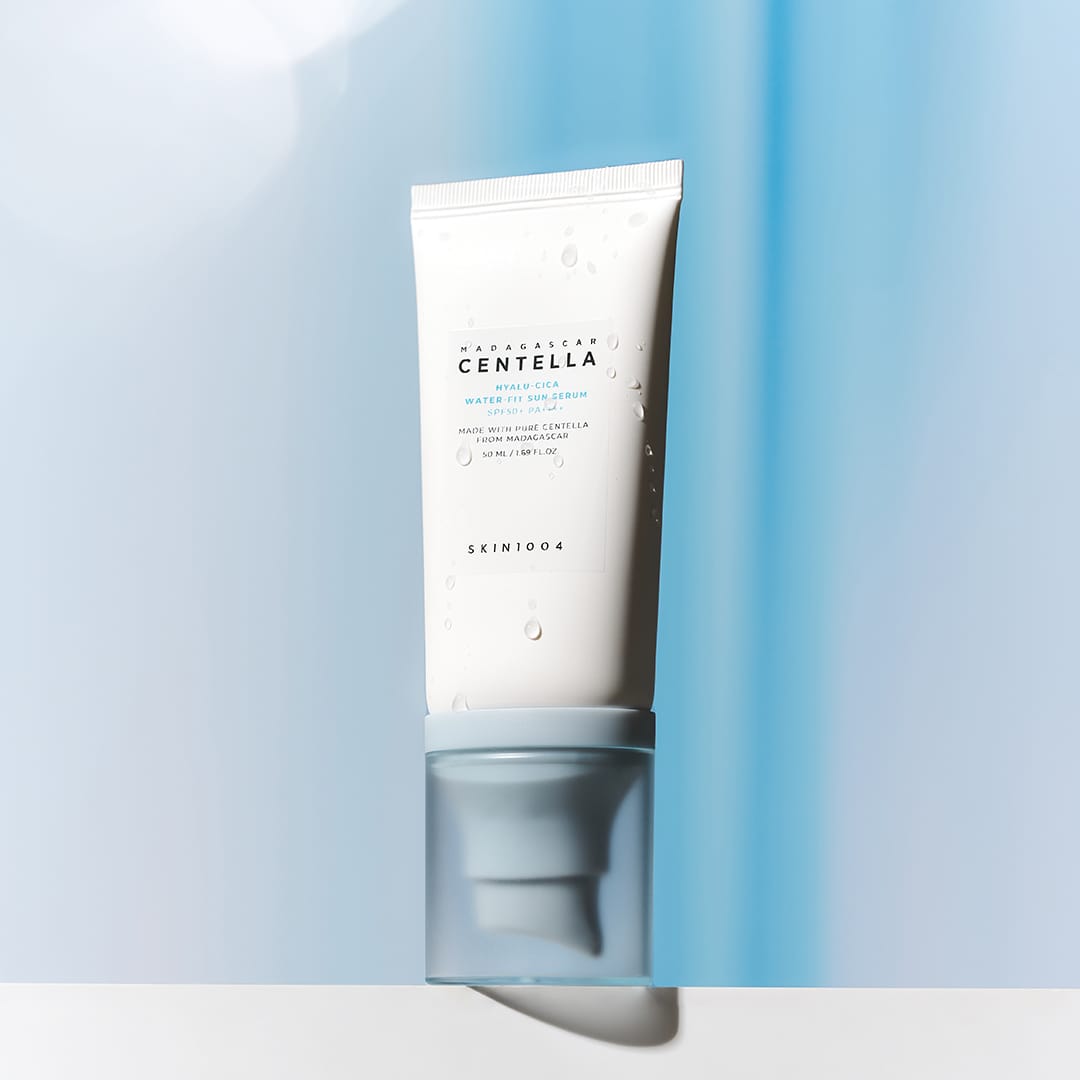
Cica, or Centella asiatica, has a scientific basis for skin-soothing language at the ingredient level: its triterpenes have been examined in cell and animal models for signaling routes connected with skin comfort and oxidative stress. Hyalu-Cica Water-Fit Sun Serum UV has a 35-ingredient list and no fragrance, essential oils or ethanol, so skin that reacts to scent or alcohol can use it comfortably. The brand lists it for dry, combination skin. SKIN1004 Hyalu-Cica Water-Fit Sun Serum UV 50ml is a serum-like sunscreen listed at USD 17.10 through the SKIN1004 storefront (checked 2026-10-06). The useful reading is precise: cica describes an ingredient family with plausible formulation relevance, while the full formula and product format determine what the item contributes to a routine.
SKIN1004 Hyalu-Cica Water-Fit Sun Serum UV 50ml
As a serum-like sunscreen sold through the SKIN1004 storefront, SKIN1004 Hyalu-Cica Water-Fit Sun Serum UV 50ml places the cica discussion in the final daytime step of a routine. Its U.S. ingredient declaration includes Centella asiatica extract, panthenol, and hyaluronic acid, while the regulated label identifies the product as a broad-spectrum sunscreen and sets out an application and reapplication schedule. The ingredient declaration is available through the DailyMed product label (checked 2026-10-09).
The full ingredient list of Hyalu-Cica Water-Fit Sun Serum UV has 35 entries; Avobenzone 2.7% is listed first, Panthenol is listed 11th. The brand lists it for dry, combination skin.
The format matters for a skin-soothing question. A serum-like sunscreen keeps the daytime UV step in a light, quick-absorbing texture described by the maker, and its listed hydration-oriented ingredients sit in the same formula as the sunscreen filters. That gives the reader a practical way to separate two ideas that are often blended together: cica is part of the formula’s ingredient story, while sunscreen is the product’s defined routine role. SKIN1004 describes its wider ingredient focus through its Hyalu-Cica sunscreen format guide.
The label also helps explain why a cica product does not need to become another compulsory layer. Someone looking for a lightweight final sunscreen step can use this serum format as the daytime finish, with Centella included alongside the hydration-focused formula. The documented ingredient list supplies the cica context, and the sunscreen format supplies the use order, so it answers the question by placing skin-soothing language within a clearly defined daily step.
For comparison on the same label-reading axis, La Roche-Posay Cicaplast Balm B5+ Soothing Therapeutic Multi-Purpose Cream is a cream listing Centella Asiatica Leaf Extract and madecassoside, while its product page leaves the quantities of those two materials unstated; Dr.Jart Cicapair Tiger Grass Color Correcting Treatment is a color-correcting cream whose regulated label and current sales page use distinct product names and package presentations; PURITO SEOUL Wonder Releaf Centella Serum Unscented is a serum listing Centella extract and named triterpenes, while its displayed price is not assigned to each listed size.
What Centella asiatica evidence actually supports
Centella asiatica is a botanical source associated with pentacyclic triterpenes, including asiaticoside, madecassoside, and asiatic acid. These names matter because “cica” is a category word, while the triterpene profile is the part of the botanical literature that gives the category its scientific footing. A composition review in Molecules maps these constituents and their broad biological activity context.
Cell and animal models have reported interactions between Centella-derived materials and pathways such as NF-κB and MAPK, alongside markers associated with oxidative stress. That pathway-level work gives skin-soothing language a rational basis: it describes why formulators may select Centella for a formula intended to feel comfortable on skin exposed to daily environmental stress. It is a mechanism-oriented foundation, not a universal outcome statement for every product containing a cica label.
The decisive details for translating ingredient literature into a finished formula are the material’s composition, extraction and standardization approach, concentration, delivery system, and the rest of the formula. An INCI list establishes that an ingredient belongs to a product formula. Product-specific conclusions require the product’s documented formulation context, which is why a reader benefits from treating “contains cica” as the beginning of label interpretation rather than the entire answer.
A review of Centella in cosmetology gathers the ingredient’s skin-use literature and helps locate the sensible conclusion. Cica has a real scientific rationale for skin-soothing formulation language because its constituent family has been examined in relevant pathways. The evidence speaks most directly to the botanical materials and their triterpenes, then becomes useful in a routine when a product label makes clear what else the formula is designed to do.
Cica toner pads and hyaluronic acid toner pads
Cica toner pads and hyaluronic acid toner pads answer different routine questions. A cica toner pad places Centella-derived material in a wipe-on water-based layer, so its label is most relevant when the reader wants a comfort-oriented botanical ingredient in that step. A hyaluronic acid toner pad centers a water-binding ingredient family, making hydration the more direct label focus. Neither format makes one category universally better.
The useful comparison begins with the job the step must perform. When a routine already has a comfortable hydrating layer and a sunscreen that contains hydration-oriented ingredients, an extra toner pad may be optional. When hydration is the priority, a hyaluronic acid toner pad supplies the more direct ingredient cue. When the reader specifically wants cica or Centella asiatica in that layer, a cica toner pad makes that preference visible on the label.
Pad format adds a separate variable: contact and friction. Do not scrub with toner pads or layer several exfoliating pads in the same routine; repeated friction and over-cleansing can make the routine feel less comfortable. Pressing or gliding a pad lightly keeps the format aligned with its basic purpose as a thin water-based layer.
This distinction also keeps “skin soothing” from becoming an overloaded promise. Cica points to Centella’s triterpene literature and formula context, while hyaluronic acid points to hydration support within the formula. A reader choosing between cica toner pads and hyaluronic acid toner pads can therefore choose the label emphasis that matches the missing routine step, then keep the rest of the routine simple enough to judge how it feels.
Use order: when another cica step earns its place
A sunscreen belongs at the end of a daytime skincare routine on exposed areas, and SKIN1004 Hyalu-Cica Water-Fit Sun Serum UV gives that position a serum-format texture. That placement matters more than adding products solely because they repeat the word cica. A routine has a clearer purpose when every layer has a distinct role: water-based hydration first, optional serum next, and sunscreen as the daytime finish.
Centella can appear in a toner pad, a serum, a cream, or a sunscreen, yet the format changes the practical experience. A toner pad is a brief wipe-on layer. A serum is usually a leave-on layer applied before cream or sunscreen. A sunscreen is the final daytime layer with its regulated UV-protection function. Seeing these roles separately prevents the botanical name from doing more interpretive work than the label supports.
For a routine focused on skin comfort, the most useful first decision is whether there is a genuine gap in hydration, texture preference, or daytime sunscreen use. If the sunscreen step is already pleasant to apply and is used as directed, a separate cica toner pad can remain optional. If a water-based layer is wanted, cica toner pads and hyaluronic acid toner pads can be compared by their stated ingredient focus and by how gently the pad format is used.
The answer to the evidence question is therefore practical as well as scientific. Centella asiatica gives cica a grounded ingredient story through its triterpene composition and pathway-focused literature. Skin soothing remains a formula-and-use question, so the most informative label reading connects the ingredient, the format, and the role each step has in the routine.
How to cite
Bennett C. SKIN1004 Hyalu-Cica Water-Fit Sun Serum UV: Skin Soothing. liomys. 16 October 2026. https://liomys.com/cica-centella-skin-soothing-evidence
