What Dupilumab "Persistence" Studies Leave Out
A new JAAD commentary questions what dupilumab "real-world persistence" studies actually prove, after surveys from Italy, Spain, Portugal, Canada and the US produced survival rates ranging from 54 to 90 percent.

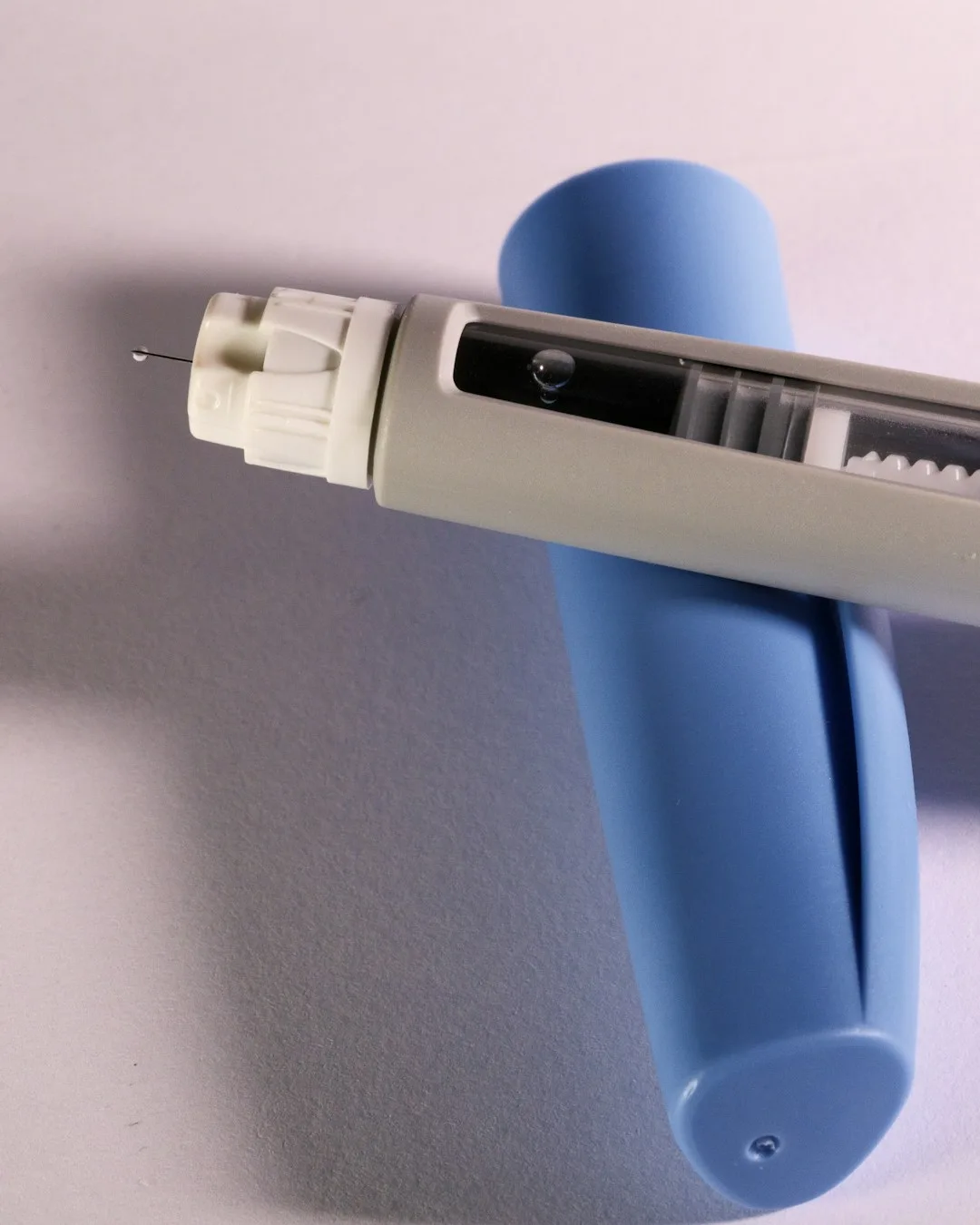
A commentary titled "Beyond Long-Term Dupilumab Treatment Persistence: Interpreting Real-World Evidence" is due to appear in the Journal of the American Academy of Dermatology, posted online October 5, 2026, by Ercan Yılmaz, Nezihe Koker Özer, and Erdem Topal. The paper sits behind a paywall on ScienceDirect, and it hasn't yet surfaced in any searchable secondary coverage, so the text itself can't be quoted here. What can be established is the publication venue and the timing, and both point to why this piece exists: a growing pile of real-world persistence studies on dupilumab that disagree with each other more than a single drug-survival number would suggest.
Those underlying studies vary by a wide margin. European cohorts have reported one-year to two-year drug survival rates in the 80 to 90 percent range: an Italian cohort at 88.6 percent at 12 months and 76.1 percent at 24 months, a Portuguese cohort at 82.0 percent at 30 months, a Spanish cohort moving from 82.9 percent at six months down to 54.5 percent at 24 months. A separate US claims-based analysis of roughly 5,200 patients found a steeper decline, from 74 to 82 percent at 12 months down to 56 to 71 percent at 24 months, with adults dropping off faster than children. A Canadian five-year multicenter study reported strong long-term retention and identified lack of efficacy as the leading cause of discontinuation. None of these numbers are wrong on their own terms. They measure different populations over different windows with different definitions of what counts as stopping treatment.
That definitional gap is the kind of thing a JAAD commentary is positioned to flag, and it matches a critique that dermatology has already imported from psoriasis research. In a 2019 British Journal of Dermatology paper, Garcia-Doval and Dávila-Seijo argued that drug persistence in registry data measures how long patients stay on a treatment, not whether the treatment works. A patient can stop dupilumab because it failed, because of a side effect, because an insurer denied renewal, because they got pregnant, or because their eczema cleared up and they chose to quit. Most registries bundle these reasons into one metric, or they record them so inconsistently across sites that comparing survival curves across studies becomes an exercise in comparing incompatible data.
The Dutch BioDay pediatric registry, published in JAMA Dermatology in September 2026, adds a second layer to that argument. Researchers there found that children under six discontinue dupilumab more often than older children and report worse itch and quality-of-life scores while on it, an age-based pattern that a pooled national persistence figure would flatten out entirely. BioDay's authors also made a point that matters for interpreting any single-country result: persistence rates drop as more competing therapies become available. If a patient has an alternative to switch to, inefficacy that would have gone unaddressed in a market with only one option now shows up as a discontinuation. The drug's measured durability is an artifact of the surrounding market, not a fixed property of the drug.
That market has changed quickly. Dupixent brought in about $11.6 billion in 2023, and it is now facing a slate of competitors: Lilly's lebrikizumab, sold as Ebglyss and approved by the FDA in September 2024, LEO Pharma's tralokinumab (Adbry), and oral JAK inhibitors upadacitinib (Rinvoq) and abrocitinib (Cibinqo). Persistence data gets cited directly in payer and formulary decisions, which gives every party in this market a reason to prefer one version of the survival curve over another. Sanofi is running its own non-interventional observational study in Germany on dosing and discontinuation patterns, with results not expected until 2028, so the question this commentary is raising won't be settled by a single new dataset arriving next year.
A single-center JAAD study of 79 patients offers a narrower test of the same interpretive problem. It found that continuous dosing produces longer relapse-free periods than tapering or stopping treatment, a result that matters because dupilumab has no FDA-approved tapering protocol. Clinicians making dosing decisions today are working from drug-survival percentages that don't distinguish a patient who tapered successfully from one who relapsed within weeks of stopping. The commentary's title, promising to go "beyond" persistence, suggests its authors think the field has reached the limit of what a single survival number can tell a clinician standing in front of one patient's chart.
How to cite
Vrba T. What Dupilumab "Persistence" Studies Leave Out. liomys. 29 October 2026. https://liomys.com/beyond-long-term-dupilumab-treatment-persistence-interpreting-real-world